
Part 1
For eight years, I believed I knew exactly how my father spent every Thursday.
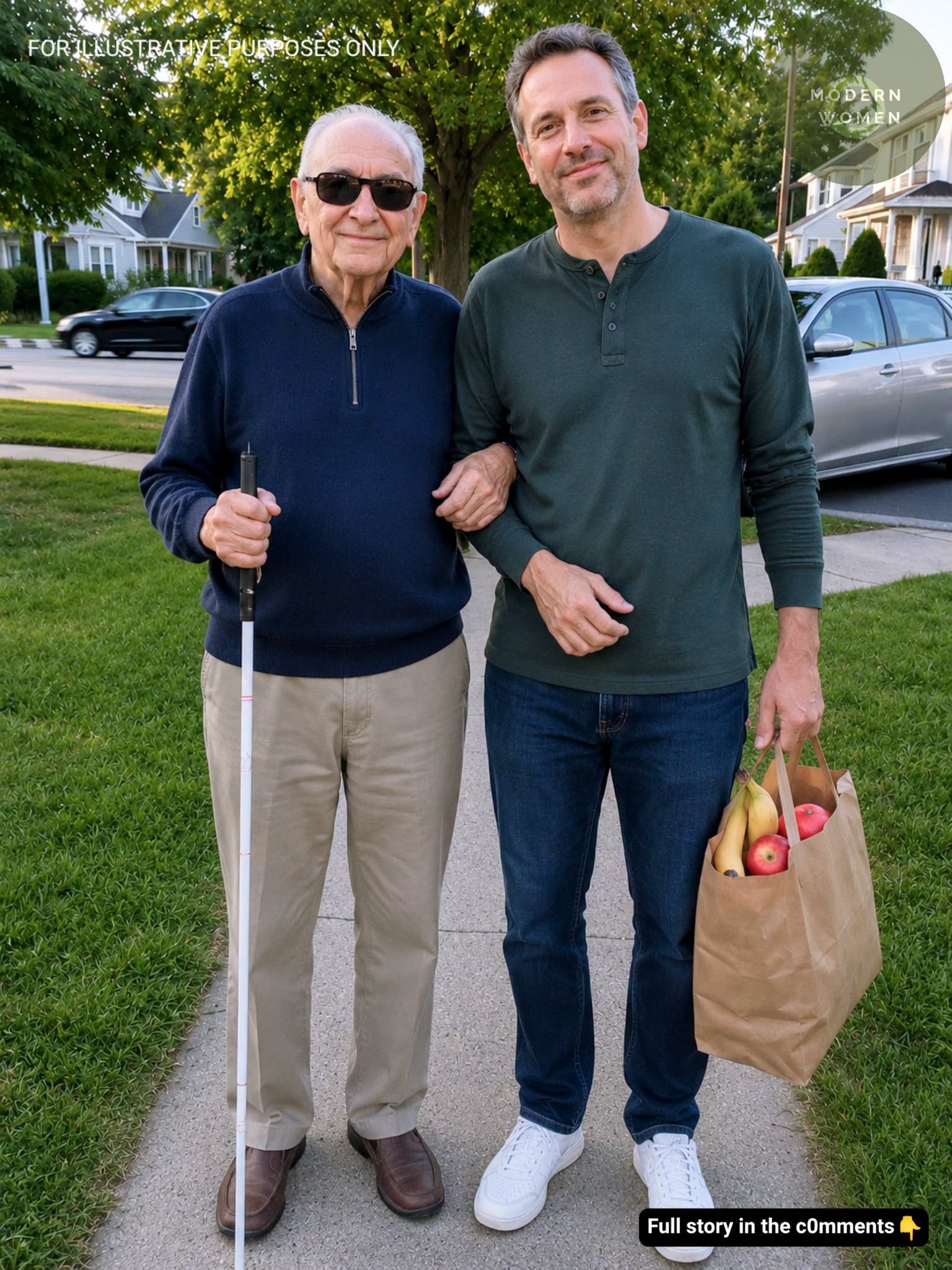
He would wake before sunrise, button his favorite flannel shirt, and wait patiently on the front porch with a mug of coffee balanced beside him. Around nine o’clock, my neighbor Ben would pull into the driveway in his aging pickup truck, honk twice, and call out, “Your royal carriage has arrived.”
Dad always had the same answer.
“It still smells like stale coffee and questionable decisions.”
Ben would laugh, Dad would climb into the truck, and they would disappear for the day.
I thought I knew the routine.
A glaucoma appointment.
A stop at the grocery store.
The pharmacy.
Lunch at the diner downtown.
Then home before sunset.
For eight years, I never questioned it.
After all, why would I?
Looking back now, I realize those Thursdays had almost nothing to do with doctors.
Everything I believed about them was only half the truth.
The rest of the story was hidden inside one sealed envelope that my father made Ben promise not to give me until after he was gone.
By the time I opened it, it had already changed three lives.
Ten years before my father’s funeral, doctors diagnosed him with advanced glaucoma.
The damage had been progressing silently for years before anyone realized how serious it had become. Despite surgeries, medications, and every specialist they could recommend, his eyesight continued to fade until the world became little more than shifting shadows and patches of light.
Eventually, he could barely recognize faces standing a few feet away.
Everyone urged him to leave the old family house.
He refused every suggestion.
“The walls still smell like your mother’s cooking,” he always told me. “The hallway still has the dent where you tried riding your bicycle indoors when you were twelve.”
I laughed every time he brought up that story.
“You’ve never let me forget that.”
“Because it was spectacular.”
Then his voice would soften.
“If I leave this house, I’ll lose your mother all over again.”
There was never any arguing with that.
The problem was that I lived nearly a thousand miles away.
Life had carried me somewhere completely different.
My wife and I were both buried in demanding careers while trying to raise two energetic children whose schedules seemed to grow busier every month. Soccer practices, school projects, parent-teacher conferences, business trips—it felt as though every week disappeared before it even began.
The distance weighed on me more than I admitted.
Every time Dad insisted he was fine, I wondered if I was failing him.
Still, he never allowed guilt to creep into our conversations.
Instead of asking why I hadn’t visited sooner, he wanted to hear about his grandchildren.
“Did Emma finally finish that science project?”
“How did Jake’s baseball game go?”
“And tell me honestly… are you eating actual meals, or surviving on coffee again?”
Those questions became our routine.
He never complained.
Never hinted that he was lonely.
Never made me feel like I owed him more than I could give.
But there was one thing he could no longer manage alone.
The medical appointments.
His glaucoma required regular monitoring, and although his vision could not be restored, doctors wanted to ensure no additional complications developed.
Driving was no longer possible.
Navigating busy waiting rooms alone had become dangerous.
He needed someone beside him.
That someone became Ben.
Ben had lived next door for longer than I had been alive.
He and my father had repaired fences together, shoveled each other’s driveways after every snowstorm, argued over baseball scores, and spent countless evenings sitting on their adjoining porches discussing absolutely nothing important.
He wasn’t just a neighbor.
He was family.
By then, Ben had retired from roofing.
He hated sitting still.
When I nervously offered to pay him for driving Dad every Thursday, he looked offended.
“I don’t need your money.”
“I know.”
“I mean it.”
“I still know.”
Finally, after several minutes of arguing, he sighed.
“Fine. If paying me helps you sleep at night, I’ll take it.”
Then he smiled.
“But understand something.”
He pointed toward my father’s house.
“Your dad spent his whole life helping everybody else. Let someone return the favor without making it awkward for him.”
That arrangement gave me peace.
Every Thursday, Ben picked him up.
Every Thursday, Dad came home smiling.
Whenever I called that evening, there was always another ridiculous story waiting.
“The doctor says I’m still too handsome for my age.”
“You don’t even know what he looks like.”
“I can hear admiration.”
Other weeks he complained dramatically about audiobooks.
“If one more narrator whispers dramatically before every chapter, I’m switching to silence.”
Sometimes he bragged about beating Ben at checkers.
From somewhere in the background Ben would yell,
“He’s cheating! Don’t believe a word!”
“I heard that!”
“You were supposed to!”
Their laughter always reached me through the phone.
For a few minutes every evening, the thousand miles between us seemed much shorter.
Those calls became the best part of my day.
Sometimes I imagined the sounds around him.
Keys jingling.
Cabinet doors opening.
Ben rummaging through the refrigerator without asking permission.
The familiar creak of Dad’s kitchen chair.
Everything sounded so ordinary.
So permanent.
I convinced myself those Thursdays would continue forever.
I couldn’t have been more wrong.
The last conversation we ever had seemed completely ordinary.
Dad sounded unusually cheerful.
“Thursday was productive,” he said.
I smiled.
“What did you get done besides convincing your doctor you’re impossible?”
He laughed quietly.
“You ask too many questions.”
“What does that even mean?”
“You’ll find out eventually.”
“Dad…”
He chuckled again.
“Don’t interrogate an old man.”
Before I could press him further, my daughter rushed into the room holding a math worksheet she desperately needed help with.
“I’ll call you tomorrow,” I promised.
“Tomorrow works.”
Those were the last words I ever heard him say.
There wasn’t another tomorrow.
Ben found him early Friday morning.
He had passed peacefully in his sleep, still wearing the blue sweater my daughter had given him for Christmas the previous year.
The funeral blurred into a haze of flowers, casseroles, handshakes, and sympathetic smiles.
Everyone told me the same thing.
“Your father talked about you constantly.”
“He was so proud of you.”
“He never missed a chance to brag about his grandchildren.”
I thanked each person politely.
I even smiled when it seemed expected.
Inside, though, I kept replaying our unfinished phone call.
Thursday was productive.
What had he meant?
Why hadn’t I asked one more question?
After the burial, people slowly drifted toward their cars.
The cemetery grew quiet.
Rain began falling in a soft, steady mist.
I remained beside the fresh grave, staring silently at the mound of dark earth where my father now rested.
The emptiness settled over me like a heavy blanket.
For the first time in my life, I had no one left to call for advice.
No one to tease me about working too hard.
No one to ask whether I’d eaten dinner.
Footsteps crunched softly behind me.
I didn’t turn.
Somehow, I already knew who it was.
Ben stopped beside me wearing the same weathered brown coat he had worn at my mother’s funeral years earlier.
He looked older than I had ever seen him.
Not because of wrinkles.
Because grief had finally caught up with him.
Without speaking, he reached inside his coat and removed a sealed envelope.
My name was written across the front in my father’s unmistakable handwriting.
My chest tightened.
I reached for it.
Ben didn’t let go.
His rough hands trembled so violently that the envelope shook between us.
That frightened me more than anything else.
Ben had climbed roofs during thunderstorms.
He had once chased away burglars wearing nothing but pajama pants and work boots.
I had never—not once—seen him afraid.
Slowly, he looked from the envelope to my father’s grave.
Then back at me.
His voice was barely above a whisper.
“He made me promise…”
He swallowed hard before continuing.
“He made me promise to tell you where we really went every Thursday.”
For a second, I almost laughed.
I pictured secret poker games.
Fishing trips.
Long lunches they had hidden because they knew I’d worry about Dad skipping appointments.
Instead, Ben’s expression remained completely serious.
“I wasn’t just driving him,” he said quietly.
“The places mattered.”
He paused.
“But what we were doing there mattered even more.”
The rain suddenly felt much colder.
And for the first time since my father died, I realized I had never really understood what those eight years had meant.

Part 2
For several long seconds, neither of us spoke.
The rain tapped softly against our coats while the cemetery emptied around us. Cars pulled away one after another until only a handful remained near the entrance.
I looked down at the envelope.
My father’s handwriting covered the front in the same slightly uneven script I had seen on birthday cards, grocery lists, and Christmas gifts my entire life.
I wanted to open it immediately.
At the same time, I was terrified of what might be inside.
“What do you mean?” I finally asked.
Ben kept staring at the fresh mound of earth.
“I mean your dad wasn’t hiding anything bad from you,” he said quietly. “But he was hiding something important.”
I frowned.
“If they weren’t doctor’s appointments…”
“They were sometimes.”
He nodded.
“We always made the medical appointments. Your father insisted on that. We never skipped them.”
Relief flickered across my face before confusion quickly replaced it.
“Then what?”
Ben let out a slow breath.
“The appointments were only part of the day.”
His voice cracked.
“The rest of Thursday belonged to something else.”
I slipped the envelope beneath my coat to keep it dry.
“What exactly are you trying to tell me?”
Ben rubbed both hands across his face.
“I think I should start with Claire.”
The name caught me off guard.
Ben’s daughter.
The last time I’d seen her, she had been packing a car for college while Ben hovered nearby pretending not to be emotional.
She had always been sharp, funny, and fearless.
She painted her bedroom black during high school simply because everyone told her not to.
Ben had complained for months.
Claire only laughed.
After college she moved away.
Years passed.
Eventually, people stopped mentioning her altogether.
I had never asked why.
Now I wished I had.
“Claire is my only child,” Ben said.
“I know.”
“I haven’t spoken to her in almost nine years.”
I stared at him.
Nine years?
“But… why?”
He gave a bitter laugh.
“If I could answer that in one sentence, we probably wouldn’t have stopped speaking.”
He kicked gently at the wet grass.
“It wasn’t one huge fight.”
“What was it then?”
“A thousand small ones.”
His eyes stayed fixed on the ground.
“I criticized everything.”
He laughed without humor.
“The city she chose.”
“The man she dated.”
“The hours she worked.”
“The way she raised her own life without asking my permission.”
He shook his head.
“I thought I was giving advice.”
He paused.
“She heard disappointment.”
The silence between us stretched.
“I kept telling myself she was stubborn.”
He looked toward my father’s grave.
“Your dad didn’t buy that explanation for one second.”
I folded my arms against the cold.
“He knew?”
“Oh, he knew.”
Ben smiled faintly.
“Your father noticed every Thursday that I became quiet whenever you talked about your kids.”
He mimicked Dad’s familiar voice almost perfectly.
“‘Ben… why do you suddenly sound like somebody stole your fishing pole?’”
Despite everything, I smiled.
“That sounds like him.”
“I ignored him the first week.”
Ben continued.
“The second week too.”
“The third week?”
He sighed.
“He wouldn’t let it go.”
Ben laughed through his grief.
“I swear your father could interrogate someone better than a detective.”
“What finally happened?”
“He asked one simple question.”
Ben closed his eyes.
“‘What did you do?’”
“I told him I hadn’t done anything.”
Ben snorted.
“Your father said, ‘Interesting. Innocent men usually don’t defend themselves before anyone accuses them.’”
I couldn’t help laughing.
That was exactly something Dad would say.
“I got irritated.”
Ben shook his head.
“I said Claire was impossible.”
“‘She’s stubborn.’”
“‘She’s dramatic.’”
“‘She stopped calling.’”
“‘She chose this.’”
Ben looked ashamed.
“Your father listened to every excuse.”
“What did he say?”
“He waited until I ran out.”
Ben swallowed.
“Then he looked straight at me…”
His voice softened.
“‘You miss your daughter so much that it’s leaking out of every sentence.’”
A lump formed in my throat.
“‘And instead of telling her that… you keep explaining why none of this is your fault.’”
Ben’s shoulders sagged.
“I hated hearing it.”
“But he wasn’t wrong.”
“No.”
“He wasn’t.”
The rain became heavier.
Neither of us moved.
“Three Thursdays later,” Ben continued, “I finally admitted everything.”
He took a deep breath.
“I told him about every sarcastic comment.”
“Every conversation where I made her feel like she wasn’t good enough.”
“Every birthday I expected her to organize.”
“Every phone call I ended by correcting something she’d done.”
He looked miserable.
“I loved her.”
“I still do.”
“I just didn’t know how to show it without trying to fix her.”
He laughed bitterly.
“Funny thing is… she never asked to be fixed.”
I felt something tighten inside my chest.
My father had never tried to fix me.
Even when he disagreed with my decisions, he always asked questions before offering advice.
I had never appreciated how rare that was.
“So what happened next?” I asked quietly.
Ben smiled for the first time since the funeral.
“The next Thursday…”
He actually chuckled.
“Your father ordered me to drive downtown.”
“To the hospital?”
“No.”
“The public library.”
I blinked.
“The library?”
“Oh yes.”
“I thought he’d finally lost his mind.”
Ben folded his hands into his pockets.
“I asked him what possible medical treatment happened at a library.”
“What did he say?”
“‘Humility,’ he answered.”
I laughed despite myself.
Ben joined me.
“It wasn’t funny at the time.”
“What happened there?”
“A librarian spent nearly two hours teaching me how to use my smartphone properly.”
I raised an eyebrow.
“What?”
“I could barely send a picture.”
Ben rolled his eyes.
“I treated text messages like formal complaints.”
Another reluctant smile crossed my face.
“Sounds accurate.”
“They taught me how to send photos.”
“Record videos.”
“Use voice messages.”
“Even those ridiculous little emojis.”
He shook his head.
“I thought they were childish.”
“And Dad?”
“He sat nearby pretending not to enjoy every second.”
Ben smiled through fresh tears.
“Every time I complained, your father said the same thing.”
He imitated Dad once again.
“‘Claire learned technology because she wanted to impress you when she was growing up.’”
“‘Now it’s your turn to learn something for her.’”
Ben stared toward the gray sky.
“I wanted to argue.”
“I couldn’t.”
He wiped his eyes.
“The week after that…”
“He didn’t take me to another appointment.”
“Where did you go?”
“The grocery store.”
“That’s normal.”
“No.”
Ben smiled knowingly.
“We weren’t buying groceries.”
“We bought flour.”
“Cinnamon.”
“Yeast.”
“Butter.”
“So much butter that the cashier looked concerned.”
I frowned.
“Cinnamon rolls?”
Ben nodded.
“When Claire was little…”
“I baked them every Saturday morning.”
“They were her favorite.”
His smile faded.
“I hadn’t made them once after she moved away.”
“So Dad…”
“He insisted we start again.”
Ben laughed.
“It was a disaster.”
“The first batch burned.”
“The second never rose.”
“The third somehow became harder than bricks.”
I could almost picture Dad sitting at the kitchen table laughing while Ben argued with the oven.
“The oven’s broken!” Ben had probably shouted.
“And your father answered…”
Ben grinned.
“‘The oven remembered to set the timer. You didn’t.’”
I laughed out loud.
“That sounds exactly right.”
“It does.”
Ben nodded.
“Eventually…”
“We made one decent tray.”
His smile softened into something almost peaceful.
“Your father took one bite.”
“What did he think?”
“He chewed for a long time.”
I waited.
“Then he said…”
“‘Still terrible.’”
I burst into laughter.
Ben laughed with me.
“It wasn’t terrible.”
“He just knew I wouldn’t quit if he kept insulting them.”
For the first time since Dad’s funeral, the weight inside my chest lifted ever so slightly.
For a moment, I could almost hear his laughter again.
Then Ben grew quiet.
“After that came the hardest part.”
“The apology.”
His expression became serious once more.
“I thought writing one letter would be enough.”
“It wasn’t.”
“Every Thursday…”
“I wrote another.”
“And another.”
“And another.”
“Your father listened while I read each one aloud.”
“What did he say?”
“He rejected almost every version.”
“Why?”
Ben gave me a tired smile.
“Because every draft sounded like I was defending myself.”
He looked directly at me.
“‘I’m sorry if you misunderstood me.’”
“‘I’m sorry you felt hurt.’”
“‘I’m sorry, but you have to understand…’”
He shook his head.
“Every time I finished reading…”
“Your father reached over…”
“And deleted it.”
“What did he tell you?”
Ben’s eyes filled again.
“He always said the same sentence.”
“‘Stop explaining yourself.’”
“‘Tell her why she matters.’”
Those words lingered in the cold air between us.
For several seconds, neither of us spoke.
Finally, Ben looked toward the envelope still tucked safely beneath my coat.
“Everything you need to understand is in there.”
He swallowed hard.
“Your father left you a letter.”
“And he left me one final job.”
I slowly reached for the envelope.
This time…
Ben let go.

Part 3
For a long moment, I simply stood there, staring at the envelope in my hands.
The paper had softened slightly from the rain, but my father’s handwriting remained perfectly recognizable.
I had spent my entire life seeing those letters.
Birthday cards.
Lunchbox notes.
Holiday gifts.
Now I was looking at the last words he would ever write to me.
Ben stepped back.
“I’ll wait.”
I nodded.
With trembling fingers, I opened the envelope.
Inside were several folded pages.
One stack contained neatly typed letters.
Another held a single page addressed only to me.
I unfolded my letter first.
The signature at the bottom was unmistakably his.
My boy,
If you’re reading this, then I’ve finally won our last argument.
You always insisted you would outlive me because you inherited your mother’s stubbornness.
Looks like I was the more stubborn one after all.
Before you start feeling guilty about anything, stop.
You gave me exactly the life I wanted.
You called every day.
You trusted me enough to let me stay in my own home.
Most importantly, you never treated me like I had stopped being your father simply because I couldn’t see.
Blindness changes many things.
It should never change dignity.
Ben understood that.
He never grabbed my arm unless I asked.
He described sidewalks, faces, menus, weather, sunsets, and expressions so I could still picture the world.
He waited quietly while I answered doctors’ questions myself instead of speaking for me.
He offered help without making me feel helpless.
That is a gift far greater than eyesight.
So I decided to return one.
Ben thought he was driving me every Thursday.
The truth is, we were carrying each other.
He gave me independence.
I gave him somewhere to place his regret before it became permanent.
You probably think I was hiding something from you.
You’re right.
I was hiding how useful I still felt.
Losing my eyesight never frightened me as much as becoming unnecessary.
Every Thursday reminded me I still had something valuable to give another person.
That kept me alive longer than any medication.
If Ben finally tells Claire the truth, then our work is finished.
If he doesn’t…
Give him one last push.
Not because he deserves forgiveness.
Because no parent should waste another year loving a child silently.
One more thing.
Don’t replace me.
Nobody can.
Just sit beside him once in a while.
Sometimes that’s all another human being needs.
Love,
Dad
By the time I reached the signature, tears blurred every word.
I read the letter again.
Then a third time.
Every sentence sounded exactly like him.
Gentle.
Honest.
Never dramatic.
Always quietly wise.
I folded it carefully.
Ben was still standing several feet away, pretending to study the trees so I could have my privacy.
I walked toward him.
“For Dad,” I whispered.
“I’ll help.”
Relief flooded his face.
“But understand something.”
I held up one finger.
“I’m not replacing him.”
“I know.”
“I’m only sitting beside you.”
He nodded.
“That’s what he said you’d say.”
I laughed through my tears.
“Of course he did.”
We left early the following morning.
Claire lived almost three hours away.
The drive was awkward from the very beginning.
Ben rehearsed every possible apology before we reached the highway.
“I’m sorry, but…”
“No,” I interrupted.
He sighed.
“Right.”
Five minutes later he tried again.
“I only wanted what was best…”
“That’s another excuse.”
He groaned loudly.
“I hate this.”
“My father warned me you’d say that.”
Ben glanced at me.
“You really are turning into him.”
“I’ve heard that’s not the worst thing.”
By the fourth rehearsal he slapped the steering wheel.
“You enjoy correcting me just as much as your father did.”
“We both preferred honesty.”
He snorted.
“I walked right into that one.”
About an hour later we stopped for coffee.
While I paid inside, I caught Ben standing beside a trash can with the letter in his hand.
“What are you doing?”
He jumped.
“Thinking.”
“About what?”
“Throwing this thing away.”
I hurried over and gently took the envelope from him.
“No.”
“What if she slams the door?”
“Then at least she’ll know you finally knocked.”
He looked at the ground.
“I’m scared.”
“I know.”
“So was my dad.”
He frowned.
“What do you mean?”
“He was scared you’d run out of time.”
Neither of us spoke for several minutes after that.
When we climbed back into the truck, I quietly locked the letter inside the glove compartment until we reached Claire’s house.
Ben didn’t argue.
Around noon we turned into a peaceful neighborhood lined with maple trees.
Claire’s house sat near the end of a quiet street.
Flowers surrounded the front porch.
Children’s bicycles rested near the garage.
Life had clearly continued here.
Ben gripped the steering wheel so tightly his knuckles turned white.
“I can’t.”
“Yes.”
“What if she hates me?”
“You already know she was hurt.”
“That’s different.”
“No.”
“It’s exactly why you’re here.”
He closed his eyes.
Then slowly nodded.
We walked to the front door.
Ben almost turned around twice.
Finally, he knocked.
Several seconds later the door opened.
Claire stood there wearing gardening gloves and jeans dusted with soil.
She looked older than I remembered.
More confident.
But the resemblance to Ben was unmistakable.
The same determined eyes.
The same stubborn chin.
For a heartbeat, no one spoke.
Then her expression hardened.
“You should have called.”
Ben instinctively stepped backward.
I leaned closer and whispered only four words.
“Tell her why she matters.”
He looked at me.
Then back at Claire.
Without another excuse…
Without another explanation…
He handed her the envelope.
And a small box wrapped in bakery paper.
“Cinnamon rolls,” he said quietly.
“They’re probably not very good.”
She stared at the box.
Then at him.
“I spent years protecting my pride.”
His voice trembled.
“I convinced myself you’d come back first.”
“I kept correcting you instead of loving you.”
“I made you feel like nothing you did was enough.”
He swallowed hard.
“I was wrong.”
Silence.
“I don’t expect forgiveness.”
“I only wanted you to finally hear that.”
Claire looked down at the letter.
Then opened the bakery box.
The smell of cinnamon drifted into the afternoon air.
A tiny smile almost appeared.
Almost.
“These look terrible.”
Ben laughed softly.
“My teacher said the same thing.”
She looked confused.
“Teacher?”
He smiled through tears.
“Your father’s old neighbor.”
“The blind man?”
“The very one.”
She looked toward me.
“You knew him?”
“He was my dad.”
Her expression immediately softened.
“The postcards…”
she whispered.
“What postcards?”
Without answering, Claire disappeared inside.
She returned carrying a small wooden box.
Inside lay a dozen postcards.
Each one contained only a sentence or two.
No signature.
No return address.

One read:
Your father remembers more than he knows how to say.
Another:
He’s still trying to bake cinnamon rolls. They’re getting slightly less dangerous.
Another simply said:
Pride gets heavier every year. I think he’s finally tired of carrying it.
Ben stared at them in disbelief.
“I never sent these.”
“I know,” Claire replied.
“I always wondered who did.”
Suddenly everything became clear.
Dad.
Every Thursday.
While Ben worked on becoming brave enough to apologize…
Dad had quietly been keeping hope alive on the other side.
Not manipulating.
Not forcing.
Just leaving tiny reminders that reconciliation was still possible.
Claire carefully held the newest letter against her chest.
“I can’t pretend everything’s fixed.”
“I know.”
“I don’t trust you yet.”
Ben nodded immediately.
“You shouldn’t.”
More silence.
Then Claire looked him straight in the eyes.
“One phone call.”
He blinked.
“What?”
“Every Thursday.”
She smiled faintly.
“Start there.”
Tears rolled freely down Ben’s face.
“I will.”
This time…
She hugged him.
Only for a second.
Only long enough to tell him there was still a road forward.
It wasn’t forgiveness.
It was something even more important.
Hope.
The drive home felt completely different.
The silence was comfortable now.
After nearly an hour, Ben cleared his throat.
“I should probably return eight years’ worth of payments.”
I laughed.
“So that’s been bothering you?”
“A little.”
“You stopped driving only for doctor’s appointments years ago.”
He nodded guiltily.
“I know.”
“So why keep accepting the money?”
He smiled.
“Your father said you’d become suspicious if anything changed.”
I laughed again.
“That sounds exactly like him.”
“He knew you better than anyone.”
“He did.”
We drove another few miles before Ben spoke again.
“I still feel guilty.”
“You shouldn’t.”
“I wasn’t just helping him.”
“No.”
“You were family.”
His eyes stayed on the road.
“I never realized he was helping me more.”
“I don’t think he measured things that way.”
“No.”
Ben smiled.
“He never did.”
The following Thursday, I returned to Dad’s house to begin sorting through forty years of memories.
Every room still smelled faintly of coffee, cinnamon, and cedar.
His sweaters hung neatly inside the closet.
His toolbox remained exactly where he’d left it.
I found myself reaching for the phone more than once before remembering there was no one left to call.
At exactly nine o’clock…
Tires crunched across the driveway.
Out of pure habit.
Ben.
He climbed out of the truck.
Then froze.
The front porch looked different now.
Dad’s chair sat empty.
I stepped outside carrying two cups of coffee.
“I figured,” I said with a smile, “the royal carriage still runs on Thursdays.”
Ben looked toward the empty window.
His eyes glistened.
“It feels strange without him.”
“I know.”
He accepted the coffee.
For several minutes we sat in silence.
Finally he sighed.
“The carriage feels empty now.”
I smiled.
“Then let’s fill it.”
We climbed into the truck.
No destination.
No appointments.
Just a drive.
As we passed the familiar streets, Ben automatically began describing everything outside the window.
“The bakery repainted.”
“The library planted new flowers.”
“The doctor’s office finally fixed that crooked sign.”
Halfway through the sentence he stopped.
Embarrassed.
“I guess you don’t need descriptions.”
I looked out the window.
“No.”
I smiled warmly.
“But I think I’d miss them if you stopped.”
He laughed.
“So would he.”
We drove for another fifteen minutes before the truck speakers suddenly chimed.
The dashboard lit up.
Claire Calling.
Ben froze.
His hand hovered above the answer button.
Almost instinctively, he began whispering the speech he’d clearly rehearsed all morning.
“I just wanted to say…”
I gently placed my hand on his wrist.
“No rehearsal.”
He looked at me.
Then slowly smiled.
“You really did become your father.”
“I hope so.”
He pressed the button.
“Hi… Claire.”
His voice shook.
There was a brief pause.
Then, through the speakers, came two words that filled the truck more completely than any conversation ever could.
“Hi, Dad.”
Ben closed his eyes.
A breath escaped him—a breath that sounded as though he had been holding it for nearly a decade.
Neither of us spoke.
We didn’t need to.
I looked toward the empty passenger seat where my father should have been sitting, smiling quietly while pretending not to take credit for any of this.
Instead, I reached into my jacket pocket and unfolded his letter one final time.
The paper was already becoming soft from being read so often.
I smiled through my tears.
My father had lost his sight years before he died.
Yet somehow, in the darkness he lived with every day, he had seen two broken families more clearly than anyone else.
He never spent Thursdays simply going to doctor’s appointments.
He spent them healing hearts that had forgotten how to find each other.
And every Thursday now, whenever Ben’s truck disappeared down the road after another phone call with Claire, I couldn’t help smiling.
Because even though my father was gone…
His journey hadn’t ended.
It had simply become ours.