
Aug
Part 1 — The Night Everything Changed
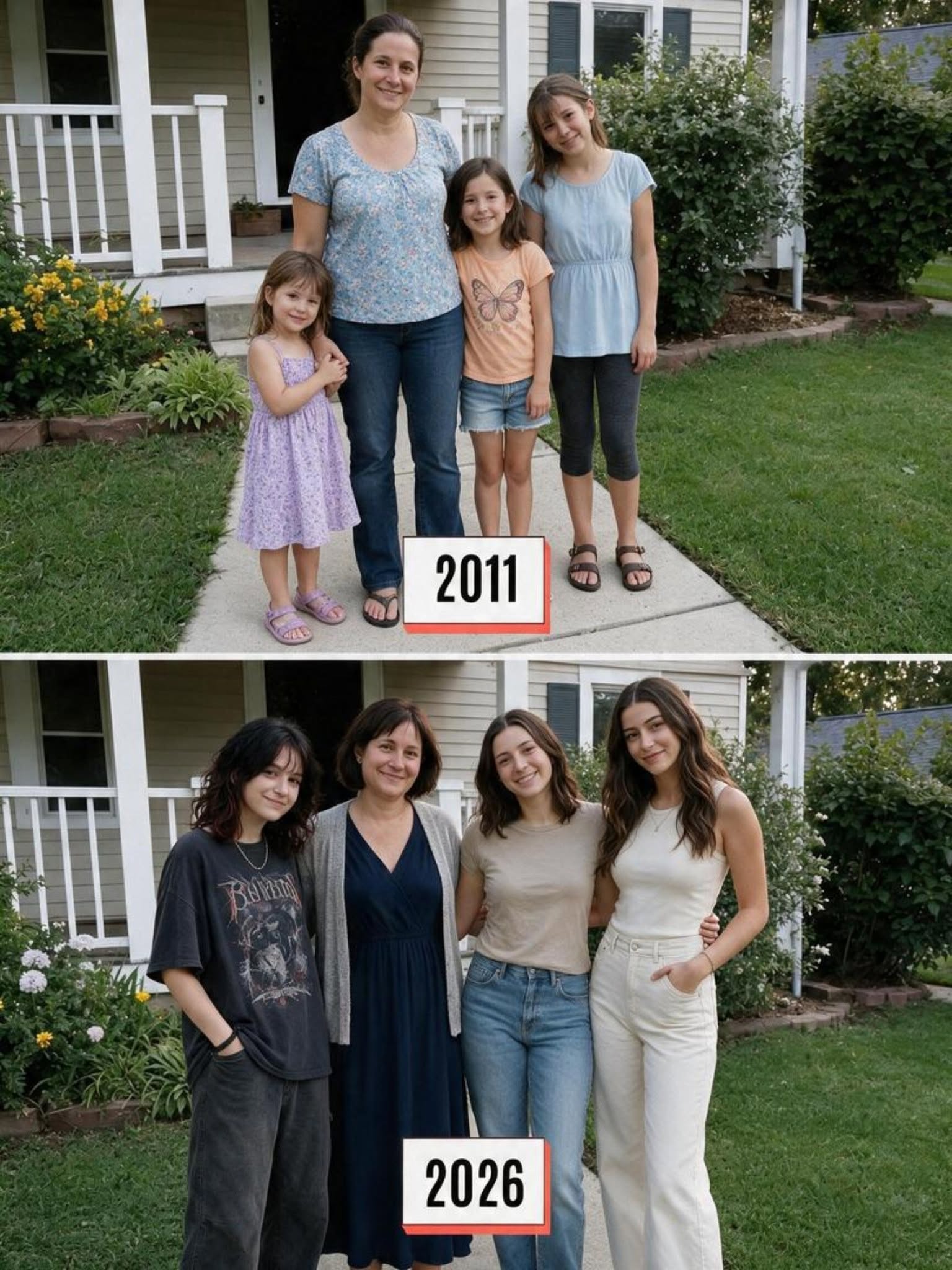
Fifteen years ago, I became a mother to three little girls without ever expecting it.
There was no preparation. No discussion. No time to wonder whether I was ready.
One day, I was simply their Aunt Sarah.
Then suddenly, I was the person packing their lunches, brushing their hair before school, sitting beside their beds when they woke from nightmares, and trying to answer questions I had no idea how to answer.
It all began after my sister-in-law, Laura, died unexpectedly in a car accident.
My brother Edwin was devastated.
At least, that was what I believed.
I still remember standing beside him at Laura’s funeral. He looked hollow, like someone had taken everything inside him and left only the outline of the man I knew.
I thought grief would bring us closer.
Instead, Edwin disappeared.
No goodbye.
No explanation.
No phone call.
Before the flowers on Laura’s grave had even begun to fade, my brother was gone.
And his three daughters were left behind.
A social worker arrived at my home with the girls and one overstuffed suitcase they were apparently expected to share.
Jenny was eight.
Lyra was five.
And little Dora was only three.
That first evening remains one of the longest nights of my life.
The house was painfully quiet.
Dora sat on the sofa clutching a stuffed rabbit while repeatedly asking the same question.
“When is Mommy coming home?”
Each time, my heart broke a little more.
I tried explaining it gently, but at three years old, death was too enormous a thing for her to understand.
Jenny cried during the first few days.
Then she simply stopped.
She became serious in a way no eight-year-old should have to be. She stopped mentioning her mother and stopped asking about her father, almost as though she had decided expecting people to return only created more pain.
Lyra reacted differently.
She refused to unpack.
For months, her clothes stayed folded inside that suitcase.
Whenever I encouraged her to put them in the dresser, she would shake her head.
“I don’t want to get too comfortable.”
That sentence haunted me.
A five-year-old should have been worried about dolls, cartoons, and which pajamas she wanted to wear.
Instead, she was already preparing herself to be moved again.
So I made her a promise.
“You’re staying here.”
She looked at me suspiciously.
“For how long?”
“As long as you need me.”
At the time, I still thought Edwin would return.
He had to.
I convinced myself there had been some emergency. Maybe he had suffered some kind of emotional collapse after losing Laura. Maybe he was trying to solve something privately before coming back.
Because what father simply walks away from three grieving daughters?
It made no sense.
So I waited.
Days became weeks.
Weeks became months.
Months became years.
There were no birthday cards.
No Christmas calls.
No letters.
Nothing.
Eventually, I stopped waiting for my brother.
By then, I had already built my life around his daughters.
And somewhere along the way, without anyone announcing it, they stopped feeling like my nieces.
They became my girls.

Part 2 — Fifteen Years of Ordinary Miracles
People sometimes imagine raising children is defined by the big moments.
Graduations.
Birthdays.
First jobs.
School awards.
But when I think about those fifteen years, I mostly remember the small things.
I remember learning that Jenny hated runny eggs but loved toast almost burned.
Lyra would only eat sandwiches cut diagonally.
Dora once refused to wear anything except purple for almost six months.
I remember fevers at two in the morning.
Science projects discovered the night before they were due.
School plays where I clapped until my hands hurt.
Parent-teacher conferences.
Driving lessons.
Broken hearts.
Arguments over curfews.
College applications.
Job interviews.
Tears over friendships that ended and celebrations over new beginnings.
I signed every permission slip.
I sat in every waiting room.
I answered every late-night phone call.
When Jenny got her first serious heartbreak, she called me.
When Lyra landed her first real job, I was the first person she told.
When Dora became frightened about what she wanted to do with her life, she sat at my kitchen table until almost midnight talking it through with me.
I never asked them to call me Mom.
They never did.
I was Sarah.
But titles stopped mattering a long time ago.
We were a family.
Not the family any of us had expected.
But a family all the same.
And after fifteen years, life had finally become peaceful.
Predictable, even.
Then, one afternoon, someone knocked on my door.
And the past walked back into my life.
I nearly ignored the knock because we weren’t expecting anyone.
But eventually, I opened the door.
For several seconds, I forgot how to breathe.
Edwin stood on my porch.
He looked nothing like the brother who had vanished fifteen years earlier.
His hair had thinned.
His face was sharper.
There were deep lines around his eyes, and something about the way he stood made him seem smaller than I remembered.
But I knew him immediately.
Behind me, the girls were in the kitchen arguing cheerfully about something.
None of them noticed him.
None of them recognized their own father.
Edwin looked past me briefly before returning his eyes to mine.
“Hi, Sarah.”
Fifteen years.
Fifteen years of silence.
And those were his first words.
I stared at him.
“You don’t get to say hello like you were gone for the weekend.”
His expression tightened.
“I know.”
I expected an explanation.
An apology.
Maybe even some desperate attempt to see his daughters.
Instead, he reached inside his jacket.
He pulled out a thick, sealed envelope and placed it in my hands.
Then he lowered his voice.
“Not in front of them.”
I looked at the envelope.
Then at him.
After fifteen years, my brother had returned with paperwork.
Part 3 — The Letter He Wrote Fifteen Years Ago
I called toward the kitchen.
“Girls, I’m going outside for a few minutes.”
“Okay, Sarah!” someone yelled back.
I stepped onto the porch and closed the door.
Edwin kept his hands buried in his pockets.
I looked at the envelope again.
“What is this?”
“Read it.”
My fingers trembled as I opened it.
Inside was a handwritten letter and several official-looking documents.
The first thing I noticed was the date.
My stomach dropped.
The letter had been written fifteen years earlier.
The paper was worn at the folds, suggesting it had been opened and closed countless times.
Edwin had apparently carried these words for years without ever sending them.
I began reading.
“Dear Sarah,
After Laura died, I discovered that losing her wasn’t the only thing falling apart.
There were debts I didn’t know existed. Overdue bills. Accounts and financial decisions she had handled without telling me how serious things had become.
At first, I thought I could fix everything myself.
I was wrong.”
I stopped and looked at Edwin.
He said nothing.
So I continued.
“The house was in danger. Our savings were nearly gone. The insurance money wasn’t enough to repair everything.
Every time I solved one problem, another appeared.
I panicked.
And eventually, I convinced myself that if the girls stayed with me, I would drag them into the disaster with me.
You were stable.
You loved them.
I knew they would be safe with you.
So I made a decision that I told myself was for them.”
My throat tightened.
I already knew what came next.
He had left.
Not because he didn’t know where his daughters were.
Not because some mysterious force had prevented him from finding us.
He had chosen to disappear.
He believed abandoning them was somehow an act of protection.
The letter continued.
“I know what this looks like.
I know what I asked you to carry because I was too afraid to carry it myself.
There is no version of this story in which I was right.
I just hope that one day I can repair enough of the damage to give them back what they were supposed to have.”
I lowered the letter.
“You wrote this fifteen years ago?”
Edwin nodded.
“Why didn’t you send it?”
He stared at the floorboards.
“Because every year I waited, it became harder.”
I almost laughed, though there was nothing funny about it.
“So instead of being fifteen days late, you decided being fifteen years late would be better?”
“No.”
His voice was quiet.
“I was ashamed.”
I wanted to stay angry.
Part of me needed to.
Then I noticed the rest of the documents.
They were recent.
Bank records.
Property records.
Legal transfers.
Statements.
Pages filled with dates, signatures, and official stamps.
Certain words appeared repeatedly.
Cleared.
Settled.
Reclaimed.
I looked up.
“What is all this?”
Edwin finally met my eyes.
“I fixed it.”
I stared at him.
“All of it?”
He nodded.
“It took longer than I ever thought it would.”
Fifteen years was certainly one way of describing “longer.”
Then I reached the final pages.
Three names appeared there.
Jenny.
Lyra.
Dora.
Whatever money, property, or assets Edwin had managed to recover had been placed in their names.
Not his.
Theirs.
I folded the papers carefully.
“You think this makes up for what happened?”
“No.”
His answer came immediately.
“You don’t get to disappear for nearly two decades, show up with paperwork, and erase everything.”
“I know.”
I hated how calmly he accepted it.
I wanted excuses so I could destroy them.
Instead, he simply stood there.
So I asked the question that hurt most.
“Why didn’t you come to me?”
His eyes lifted.
“You trusted me enough to raise your daughters, but not enough to help you?”
He didn’t answer.
That silence told me everything.
I shook my head.
“You made the decision for all of us, Edwin. You decided what your daughters needed. You decided what I could handle. You decided disappearing was better than asking for help.”
“I know.”
Then, finally, he said it.
“I’m sorry, Sarah.”
After fifteen years, my brother finally apologized.
And somehow, hearing it hurt more than I expected.

Part 4 — Telling the Girls
The front door opened behind me.
“Sarah?”
I turned.
“I’m coming!”
Then I faced Edwin again.
“This isn’t finished.”
He nodded.
“I’ll be here if they want to see me.”
I walked back inside carrying the envelope.
For the first time since the girls had arrived at my home fifteen years earlier, I had absolutely no idea what I was supposed to do.
Dora was baking cookies.
Lyra leaned against the refrigerator.
Jenny was scrolling through something on her phone.
It looked like any normal afternoon.
And I was about to change it.
I placed the envelope on the kitchen table.
“We need to talk.”
Immediately, all three looked at me.
Jenny put down her phone.
“What happened?”
I hesitated only briefly.
“Your father is outside.”
Lyra blinked.
“Who?”
“Your dad.”
Dora gave a short nervous laugh.
“Okay, seriously. What’s happening?”
“I am serious.”
Her smile disappeared.
Jenny stood straighter.
“That man you were talking to?”
“Yes.”
Silence filled the kitchen.
Lyra spoke first.
“Why is he here?”
“He brought something.”
I touched the envelope.
“Sit down.”
They did.
Then I told them everything I knew.
I explained the debts their father had discovered after their mother’s death.
I explained the financial mess.
His fear.
His terrible reasoning.
The fact that he had convinced himself leaving them with me was the only way to protect them.
I did not defend him.
But I did not make his explanation uglier than it was either.
They deserved the truth without my anger shaping it for them.
When I finished explaining the letter, I showed them the legal documents.
“According to these, he spent years rebuilding what was lost. The debts are gone. The remaining assets have been transferred.”
Lyra picked up one of the documents.
Her eyes moved quickly across the page.
“Transferred to who?”
I looked at the three of them.
“You.”
She frowned.
“All three of us?”
“Yes.”
Dora stared at the papers.
“So let me understand this. He disappeared, fixed everything in secret, and then came back with documents?”
“That’s what it appears he did.”
Jenny barely looked at the money.
“I don’t care about any of this.”
Her voice was controlled, but I knew her well enough to hear the hurt underneath.
“Why didn’t he come back sooner?”
I had no answer.
“I don’t know.”
Jenny looked away.
Lyra carefully placed the documents back on the table.
Then she said something that surprised all of us.
“We should talk to him.”
Dora stared at her.
“Right now?”
“Yes.”
“Why?”
Lyra’s expression barely changed.
“Because we’ve already waited fifteen years.”
No one argued with that.
Part 5 — The Conversation Fifteen Years Late
Lyra opened the door.
“Can you come inside?”
A moment later, Edwin entered the home he had never seen his daughters grow up in.
He wiped his shoes almost nervously before stepping farther inside.
The girls had moved into the living room.
For several seconds, nobody spoke.
Edwin looked at them.
I wondered what he saw.
Three little girls still frozen somewhere in his memory?
Because those children were gone.
Standing before him were three young women whose lives had continued without him.
Lyra spoke first.
“You really stayed away the entire time?”
Edwin looked down.
“Yes.”
Dora stepped forward.
“Did you think we wouldn’t notice?”
Her voice shook.
“Did you honestly believe losing one parent and then having the other disappear wouldn’t matter?”
Edwin swallowed.
“At the time, I thought you would be better with Sarah.”
“You could’ve visited.”
“I know.”
“You could’ve called.”
“I know.”
“You could’ve written.”
“I know.”
Dora stared at him.
“You don’t get to decide disappearing was good for us.”
“You’re right.”
That seemed to surprise her.
Edwin continued.
“I thought I was protecting you. Now I understand that I was also running away because I was afraid and ashamed.”
His eyes filled with tears.
“I’m sorry.”
Lyra picked up one of the documents.
“This is real?”
“Yes.”
“You actually spent all these years fixing everything?”
“I worked wherever I could. I sold what needed to be sold. I paid what needed to be paid. I kept going until your mother’s debts were gone and what could be recovered was recovered.”
Jenny finally spoke.
“But you missed everything.”
The room became still.
Edwin looked at her.
Jenny’s voice cracked.
“I graduated.”
“I know.”
“How?”
“Sarah sent announcements to relatives. I heard through family.”
Jenny laughed bitterly.
“So you knew.”
He nodded.
“I knew.”
“I moved away.”
“I know.”
“I came home again.”
“I know.”
Her eyes filled with tears.
“And you still didn’t come.”
“No.”
“Why?”
Edwin struggled with the answer.
“Because every year I stayed gone made coming back harder. I kept telling myself I would return when I had fixed everything. Then I realized there was always something else to fix.”
Jenny shook her head.
“You should have come back before you were fixed.”
That sentence silenced everyone.
Even Edwin.
Finally, he whispered, “I know.”
Dora slowly moved closer.
Then she asked the question none of us had yet asked.
“Are you staying now?”
Edwin looked at his daughters.
“If you’ll let me.”
There was no dramatic reunion.
No one rushed into his arms.
No music played.
No fifteen years of hurt magically disappeared.
Dora simply looked toward the kitchen.
“The cookies are probably burning.”
Lyra gave the smallest laugh.
And somehow, that broke the tension.
“We should make dinner,” Dora said.
It was such an ordinary suggestion that for a moment none of us knew how to respond.
Then I nodded.
“Dinner it is.”

Part 6 — What Forgiveness Actually Looks Like
That evening, Edwin sat at our table for the first time.
He chose the chair at the far end, almost as though he was afraid of taking someone else’s place.
Maybe he understood there was no chair waiting for him anymore.
If he wanted a place in their lives, he would have to earn a new one.
Dinner began awkwardly.
Forks scraped against plates.
Glasses were passed around.
Nobody knew exactly what was appropriate to say to someone who was both family and nearly a stranger.
Eventually, Dora asked, “What kind of work do you do?”
Edwin answered.
Lyra followed with another question.
Then another.
Jenny remained silent.
I did not pressure her.
None of us did.
Halfway through dinner, she finally asked him something herself.
It was a small question.
Nothing emotional.
But I noticed the way Edwin paused before answering, as though he understood the importance of being asked anything at all.
They weren’t forgiving him.
Not yet.
Maybe not for a long time.
But they were talking.
And after fifteen years of silence, conversation itself felt enormous.
Later that night, the girls went upstairs.
The dishes were washed.
The kitchen lights were turned off.
I found Edwin sitting on the porch.
I stepped outside and leaned against the railing.
For a while, neither of us spoke.
Then I said, “You understand you’re not forgiven just because you came back.”
“Yes.”
“They’re going to be angry.”
“I know.”
“They’ll ask the same questions again and again.”
“I’ll answer them.”
“Jenny might not want anything to do with you tomorrow.”
He nodded.
“I understand.”
“Dora may forgive you one day and become furious again the next.”
“I understand.”
“Lyra might want every detail about where you’ve been.”
“I’ll tell her.”
I studied my brother’s face.
This man had made a terrible choice fifteen years ago.
Maybe he had made it out of fear.
Maybe part of him truly believed he was protecting his daughters.
But good intentions did not erase consequences.
“You can’t repair fifteen years in one week,” I told him.
“I’m not asking to.”
“Good.”
He looked toward the darkened windows.
“I just want the chance to stop being gone.”
For the first time that day, I felt some of my anger loosen.
Not disappear.
Just loosen.
Inside that house were three young women whose childhoods had been shaped by an absence they never deserved.
But they had grown anyway.
They had become kind, capable, complicated people.
I was proud of them beyond words.
And suddenly I realized something else.
For years, I had imagined that if Edwin ever returned, everything would somehow demand an immediate decision.
Forgive him.
Reject him.
Welcome him.
Send him away.
But life rarely works that neatly.
Maybe we didn’t have to decide everything that night.
Maybe healing was not one grand moment.
Maybe it was dinner.
A question across the table.
A chair offered without a promise.
A conversation that continued even when it hurt.
That night, our house felt different.
Not because the past had been repaired.
It hadn’t.
Fifteen lost years were still fifteen lost years.
Edwin could never attend the school plays he missed.
He could never watch Jenny graduate again.
He could never comfort Lyra during the nights she was afraid she would be sent somewhere else.
He could never answer three-year-old Dora when she asked when her parents were coming home.
Some moments cannot be returned.
Some losses cannot be repaid with money, property, apologies, or documents.
But at least the truth was finally in the open.
There were no more unanswered knocks from the past.
No more wondering whether Edwin was alive somewhere.
No more imagining explanations.
He was here.
The girls were here.
I was here.
And for once, nobody was running away.
Before going inside, I looked at my brother.
“Tomorrow might be harder than today.”
“I know.”
“And the day after that might be harder still.”
He nodded.
“I’ll still be here.”
I opened the door.
“Then prove it.”
He followed me inside.
And that was how our family began again.
Not with instant forgiveness.
Not with a perfect reunion.
Not with fifteen years suddenly erased.
But with four simple words:
“I’ll still be here.”
Sometimes, perhaps, that is where healing begins.
Not by pretending the past never happened.
But by finally choosing not to disappear from the future.