
Aug
Part One: The Promise in the Velvet Box
The morning Hannah turned eleven, our kitchen smelled of cinnamon toast and warm butter. Sunlight slipped through the curtains in pale gold bands, and for a little while, our home seemed protected from every sorrow the world could possibly hold.
Hannah sat at the table in her pajamas, swinging her bare feet beneath the chair. She kept watching her father with barely contained excitement because Rick had spent the entire week hinting that her gift was special.
At last, he reached into his pocket and placed a small velvet box in front of her. The smile on his face looked boyish, almost shy.
“Happy birthday, sweetheart,” he said. “I designed these just for you.”
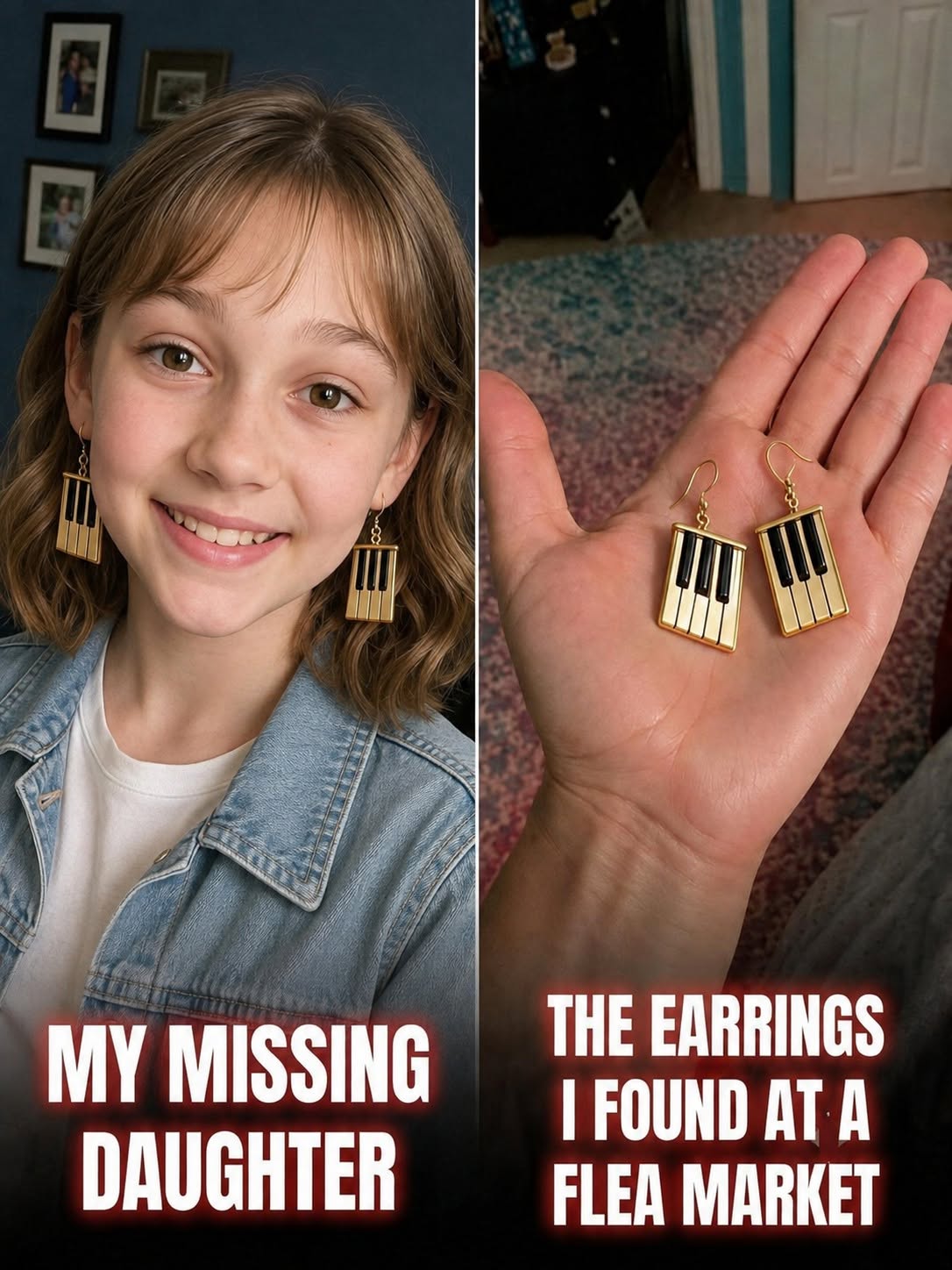
Hannah lifted the lid and drew in a delighted breath. Inside lay a pair of delicate gold earrings shaped like piano keys, each one ending in a tiny star. Rick had filled pages of his sketchbook with different versions before choosing the final design, then paid a local jeweler to make the only pair in existence.
“They are perfect,” Hannah whispered. She looked at me, her brown eyes bright with wonder. “I am never taking them off, Mom.”
I tucked a loose strand of hair behind her ear and kissed the top of her head.
“Then they will always know where they belong,” I told her.
For the next three weeks, the little stars flashed whenever Hannah moved. They glimmered above the piano keys while she practiced. They caught the light when she leaned over her math homework. They even sparkled at the dinner table when she threw her head back and laughed.
Those ordinary evenings became precious only after they were gone. I remembered Rick tapping the rhythm against her knee as she played. I remembered braiding her hair while she chewed the end of a pencil. I remembered how seriously she asked whether she was good enough for the spring recital.
“You are already good enough,” I said. “Trust your hands, and let the music follow.”
Hannah had a gift for holding on to my words. She stored them inside herself as if every reassurance were a treasure she might need later.
I wish I had paid the same attention to the things Rick did not say.
He had become secretive during the previous year. He spent long hours in the garage, which he called his workshop, and snapped if Hannah or I opened the door without knocking. Some Sundays, he drove away before breakfast and returned after dark with no explanation. When his phone rang, he often stepped onto the porch and lowered his voice.
“Who was that?” I would ask.
“Work,” he always replied. “Nothing you need to worry about, Marlene.”
And because I loved him, I accepted the answer. I mistook trust for safety. Years later, I would grieve not only for my daughter, but also for the woman I had been before suspicion entered every room with me.
Part Two: The Tuesday She Did Not Come Home
Three weeks after her birthday, Hannah left for her piano lesson with her sheet music tucked beneath one arm. She wore a pale blue sweater, and the gold stars at her ears caught the afternoon sun.
“Come straight home afterward,” I called from the porch.
“I know, Mom!” she answered, turning to wave.
The earrings flashed once. Then she rounded the corner and disappeared from view.
At six o’clock, I set the table for dinner. At six fifteen, I reheated the casserole. By six thirty, I was standing at the window, telling myself that her teacher had kept her late.
At seven, fear had taken hold of my body.
I called the piano studio. The teacher said Hannah had finished at the usual time and left on foot. Rick drove every street between our house and the studio while I phoned friends, neighbors, and parents from school. My friend Denise offered to come over, but I could barely understand her through the pounding in my ears.
By eight, police cruisers lined our quiet street. Officers searched alleys, vacant lots, bus stops, and nearby stores. One of them asked me to describe what Hannah had been wearing. I answered every question, then asked the same one in return.
“When will you find her?”
No one could promise me anything.
That night I sat on the front steps in my slippers until dawn, watching every set of headlights and believing the next car would bring her home. Rick paced behind me, repeatedly checking his phone. At the time, I thought his restlessness was grief.
I did not yet understand that guilt can look almost identical from a distance.
Days became weeks. Volunteers taped Hannah’s photograph to shop windows and telephone poles. Search teams walked the riverbanks. Detectives followed rumors that led nowhere. I kept her room exactly as she had left it, with unfinished sheet music on the piano and a sweater hanging from the bedpost.
The seasons changed around us, but inside that room it remained the same Tuesday afternoon.

Part Three: Ten Years of Unanswered Questions
The police searched actively for several years. Then the calls became less frequent. Detectives were reassigned. Posters faded in shop windows. Eventually, someone used the phrase cold case, as though my child had become a file stored in a room where no one needed to look every day.
The rest of the world continued moving. Mine did not.
Every stranger with Hannah’s eyes made my heart race. I studied missing-person reports late into the night and joined online groups where parents traded advice, sightings, and fragile hope. I followed false leads until they collapsed beneath me. Each disappointment hurt, but giving up felt worse.
Rick wanted the searching to end.
On Hannah’s birthday, at Christmas, or whenever he found me holding her school photograph, he repeated the same tired plea.
“You cannot keep living in the past, Marlene. Let our little girl rest.”
His words always disturbed me. Hannah was missing; she had never been declared dead. Yet Rick spoke as if a grave existed somewhere and he alone had seen it.
Denise never pushed that way. One rainy Thursday, she arrived with two coffees and a grief counselor’s brochure. She sat beside me at the kitchen table and covered my hand with hers.
“No one is asking you to forget Hannah,” she said. “I only want you to have enough strength to keep living while you wait.”
I put the brochure in a drawer. I never called the number.
Something inside me refused to mourn a child I could still feel in the world. Perhaps it was instinct. Perhaps it was stubbornness. Perhaps a mother’s love simply does not obey the calendar.
Ten years after Hannah vanished, on an ordinary Saturday morning, that refusal finally led me to the truth.
Part Four: The Earrings at the Flea Market
Denise persuaded me to visit the local flea market with her. She thought the crowds and noise might distract me, so I followed her past tables crowded with old books, chipped dishes, costume jewelry, and framed photographs of families no one recognized anymore.
Then I saw two tiny gold stars resting on a square of faded black velvet.
The air seemed to leave the market. Voices blurred. My knees weakened so suddenly that I gripped the edge of the table.
Piano keys. Tiny stars. A faint scratch along the back of the left earring where Hannah had dropped it beside the piano bench.
There could not be another pair.
The woman running the stall looked up from a box of china. She was middle-aged, with silver threaded through her hair and reading glasses hanging from a chain around her neck.
“Where did you get these?” I asked.
My voice sounded thin and far away.
“They came in an estate lot a couple of weeks ago,” she said. “My son handles the house clearances, so I do not know the owner.”
“Please tell me anything you can. They belonged to my daughter.”
The woman introduced herself as Cheryl. The moment she saw my face, her casual manner disappeared. She found her son’s number, wrote down the address connected to the estate, and promised to ask him for every detail. I paid for the earrings with trembling hands, barely noticing the amount.
During the drive home, I held them inside my closed fist until their edges marked my palm. I was terrified that if I loosened my grip, the only real sign of Hannah in ten years might vanish again.
Rick was pouring coffee when I entered the kitchen. I placed the earrings on the counter between us.
All the color drained from his face.
For one suspended second, neither of us moved. Then his fear turned to anger so quickly that it frightened me.
“Why did you bring those into this house?” he shouted.
“Because they are Hannah’s.”
“They are not. Jewelers make piano earrings all the time.”
“You drew this pair yourself. You chose the stars. You know exactly what they are.”
His fingers locked around the edge of the counter until his knuckles whitened.
“Throw them away, Marlene. Hannah is dead.”
The sentence struck me like a blow. Not missing. Not probably gone. Dead.
I looked into my husband’s face and understood that the earrings had not surprised him. They had terrified him.
That night, I locked myself in the guest room. I pressed the earrings to my chest and cried until exhaustion finally pulled me under. I did not know that Cheryl, unsettled by our conversation, had gone home, searched Hannah’s name, recognized the earrings from an old cold-case report, and called the police tip line.
Just after sunrise, someone knocked on my front door.
Part Five: The Sentence That Changed Everything
Two officers stood on the porch. One was Detective Palmer, a woman with steady eyes and a voice softened by years of delivering difficult news. Detective Gomez waited half a step behind her.
“Mrs. Rhodes? We need to speak with you and your husband about Hannah.”
My heart rose painfully into my throat.
“Did you find her?”
Palmer glanced past me. Rick stood barefoot in the hallway, wearing his old robe. He looked as if he had been expecting this moment for years.
The detective kept her attention on him when she answered.
“Mrs. Rhodes, it is time you learned what your husband has been hiding for the last ten years.”
The floor seemed to tilt beneath me. Palmer caught my arm and guided me to the couch while Gomez remained near the front door.
Cheryl’s son had traced the estate box to a woman named Judith Rhodes, who had died of cancer two months earlier in rural Ohio. The surname caught in my mind. I had heard it only a few times during my marriage.
“Rick’s sister,” I whispered.
Palmer nodded. Judith had been estranged from Rick since before he met me. Probate records led investigators to Judith’s former neighbor, Beverly, who had cared for her during her illness. Beverly confirmed that a young woman had lived with Judith for nearly ten years under a different surname. Ohio authorities had checked on her during the night and verified her identity through childhood details, photographs, and the birthmark on her right shoulder.
She was twenty-one years old. She was safe. And she was Hannah.
A sound escaped me that I did not recognize as my own. Relief came first, so powerful it hurt. Then I turned toward Rick.
“What did you do?”
Tears moved down his face. He slid against the wall until he was sitting on the floor.
“I was in trouble,” he said. “Gambling debts. I had taken the money your mother left for Hannah’s education. Every dollar. I thought I could replace it before you noticed.”
He explained that Hannah had returned early from piano practice that Tuesday and overheard him speaking to a creditor. She heard my name, the account balance, and enough of the conversation to understand that her father had stolen from her.
“She said she was going to tell you,” Rick continued. “I panicked.”
He had persuaded Hannah to get into the car by claiming I had been injured. Instead of taking her to a hospital, he drove her across state lines to Judith’s isolated home. He carried forged guardianship papers and told Judith that I had abandoned the family after becoming unstable. He warned her that contacting me would place Hannah in danger.
To Hannah, he told a different lie: that I had discovered the missing money, blamed her for revealing it, and wanted nothing more to do with either of them. He promised the separation would last only a few days. Then he left and never returned.
“She was eleven,” I said. My voice was barely more than breath. “She trusted you.”
Rick covered his face.
“Every month I waited, it became harder to confess. If I brought her home, I would lose you, the house, everything. Then the police were involved, and I was afraid I would go to prison.”
The fury inside me felt almost cold.
“For ten years, you watched me search. You heard me crying in her room. You told me to bury her, and all that time you knew she was alive.”
“I am sorry,” he whispered. “I loved her too.”
“Do not call what you did love.”
Detective Gomez asked Rick to stand. He did not resist as they escorted him outside for questioning. He would later face charges related to theft, fraud, custodial interference, and obstructing the investigation. None of it could return the years he had taken from us.
Only one question mattered to me then.
“When can I see my daughter?”

Part Six: The Voice She Remembered
Detective Palmer drove me to Ohio the next morning. I sat with Hannah’s earrings inside their velvet pouch in my lap, opening and closing my fingers around it as mile after mile disappeared beneath us.
Palmer explained what investigators had learned from Beverly. Judith had believed Rick’s story at first. She lived in a remote area, distrusted authorities, and thought she was protecting a frightened child. Rick had supplied false contact information and forged letters suggesting I wanted no communication.
As Hannah grew older, her memories began to challenge those lies. She remembered me waiting after piano lessons. She remembered our bedtime songs and the way I called her ‘baby’ when she was frightened. Letters she tried to send were returned because Rick had given Judith a false surname and address for me.
Judith eventually began to suspect the truth. Illness overtook her before she found me, but she left Hannah a letter confessing everything she knew and apologizing for not questioning Rick sooner. After Judith died, Beverly invited Hannah to stay at her home while they sorted out the estate and decided what came next.
The earrings had spent ten years in the back of Judith’s dresser. She had removed them the night Hannah arrived, afraid they might be lost while the child slept. During the estate clearance, the velvet box was mistaken for Judith’s jewelry and sold with the rest of the household belongings.
A forgotten box had traveled to a flea market and found its way back to the one person who would recognize it.
Beverly’s house was pale yellow with a porch swing moving in the wind. She opened the door wearing an apron dusted with flour. Kindness and worry filled her face.
“She is in the living room,” Beverly said. “I told her someone who has loved her every day is here.”
Hannah stood beside the window with her back to me. She was taller than I had imagined, with her hair falling past her shoulders. For an instant I saw both the grown woman before me and the little girl who had waved from the corner.
“Sweetheart,” I whispered.
She turned slowly.
Her eyes were my daughter’s eyes. Time had changed everything around them, but not the way they held mine.
“I know that voice,” she said, beginning to cry. “I have been trying to remember it for so long.”
I crossed the room. She moved at the same moment, and we met in the middle.
I had imagined our reunion thousands of times. In some versions I spoke perfectly. In others, she ran into my arms as if no time had passed. The truth was quieter. We clung to each other and wept, both of us trembling, neither willing to let go long enough to form a sentence.
At last, Hannah pulled back just far enough to study my face.
“You did not stop looking?”
“Not for one day.”
“Dad said you did not want me.”
I held her cheeks between my hands.
“There has never been a moment in your life when you were unwanted. Not one.”
Later, Beverly gave us Judith’s letter. Hannah read it aloud, pausing whenever her voice broke. Judith wrote that regret had followed her once the inconsistencies became impossible to ignore. She asked Hannah to forgive her, not because she deserved it, but because she had loved her and wished she had been brave enough to seek the truth sooner.
“She was good to me,” Hannah said. “She was wrong, but she was good to me.”
“Both things can be true,” I answered.
Then I opened the velvet pouch and poured the gold earrings into her palm.
“You once told me you would never take them off,” I said. “Do you remember?”
A small, astonished smile appeared through her tears.
“I remember the box. I remember the piano keys. And I remember you saying they would always know where they belonged.”
Hannah fastened the earrings in place. The tiny stars caught the afternoon light, exactly as they had on the last day I saw her.
This time, she did not disappear around a corner. This time, she came home with me.
Part Seven: Finding Our Way Back
I filed for divorce the following week. The courts and investigators would decide what consequences Rick faced. I had spent ten years allowing his lies to consume my life; I refused to give them another day that belonged to Hannah.
Reuniting did not erase what had happened. Love returned instantly, but familiarity had to be rebuilt. Hannah and I were mother and daughter, yet we were also two adults learning the shape of each other’s lives.
We began with small things.
Sunday breakfasts stretched into long afternoons. We walked through the park and traded memories, comparing the childhood she remembered with the story she had been told. Some days brought laughter. Other days ended in tears neither of us could explain. We found a counselor who understood family separation and trauma, and we learned that healing did not require us to pretend the missing years had never existed.
One evening, Hannah sat at our old piano. Dust had gathered between the keys, and several notes sounded slightly out of tune. She placed her hands in position, hesitated, and began the recital piece she had practiced at eleven.
The first measures were uncertain. Then her fingers remembered.
I stood in the doorway with tears on my face, listening as the unfinished song moved through the house at last. When she reached the final chord, she looked over her shoulder at me.
“I trusted my hands,” she said.
I smiled because she had carried my words after all.
Mothers are often told that our instincts are too emotional, too stubborn, or too loud. Mine was all three. It kept a light burning when everyone around me wanted darkness to be the answer.
A pair of earrings did not create a miracle. Cheryl’s compassion, a detective’s persistence, Beverly’s kindness, and Hannah’s own refusal to forget all helped reveal the truth. But when those tiny gold stars appeared among the discarded belongings of a stranger, something inside me recognized them before reason could speak.
For ten years, Rick tried to convince me that hope was a weakness.
He was wrong.
Hope was the thread that remained between my daughter and me, stretched across lies, distance, and time without ever breaking. And when Hannah finally walked through my front door again, the stars at her ears flashed in the light as if they had known the way home all along.