For years, I believed being a good mother meant always being there for my children.
Whenever one of them needed money, I helped. When they complained about bills, I paid them. When they lost jobs, I covered their expenses. I even postponed my own plans because I was afraid they might struggle without me.
But at sixty-eight, I finally realized something painful.
My three grown children no longer saw me as their mother. They saw me as their personal bank account.

My oldest son, Michael, was thirty-eight and had never held a steady job for more than a few months. My daughter, Rebecca, was thirty-five and constantly claimed she was searching for the right career, although she spent most of her days shopping or meeting friends. My youngest, Daniel, was thirty-one and seemed to believe that adulthood was something he could postpone indefinitely.
Every month, one of them called with another emergency.
Michael needed help with his car payment. Rebecca couldn’t afford her rent. Daniel had an unexpected bill that he insisted couldn’t wait.
And every time, I opened my wallet.
I had worked hard my entire life. After my husband died, I managed our savings carefully, paid off our home, and invested what remained. I wasn’t extravagantly wealthy, but I had enough to live comfortably and leave my children a meaningful inheritance.
I had always imagined that money would help them build secure futures.
Instead, it seemed to have become an excuse for them never to build anything themselves.
The breaking point came on a Tuesday afternoon.
Michael called to tell me his electricity might be disconnected. I transferred money into his account immediately. An hour later, Rebecca messaged me asking for money for a weekend getaway because she desperately needed a break from stress.
That evening, Daniel arrived at my house without calling first.
“Mom, I need five hundred dollars,” he announced as he walked into my kitchen.
I stared at him. “What happened to the money I gave you last week?”
He shrugged. “It’s gone. Things are expensive.”
“Did you look for a job?”
His expression changed instantly.
“Why do you always have to bring that up?”
“Because you’re thirty-one years old, Daniel. You can’t keep asking me to pay for everything.”
He rolled his eyes. “It’s not like you’re struggling. What’s the point of having money if you won’t help your own children?”
That sentence stayed with me long after he left.
He believed my savings belonged to him simply because I was his mother.
That night, I sat alone in the living room and looked at a photograph of my late husband and me standing beside our first home. We had worked overtime, skipped vacations, and saved for years to create a better future for our family.
We hadn’t sacrificed so much so our children could spend their lives avoiding responsibility.
The next morning, I called all three of them and asked them to come over for dinner that weekend.
“I have something important to discuss about my will,” I told them.
They arrived promptly.
For once, nobody complained about traffic or asked me to order expensive takeout. They were eager to hear what I had to say.
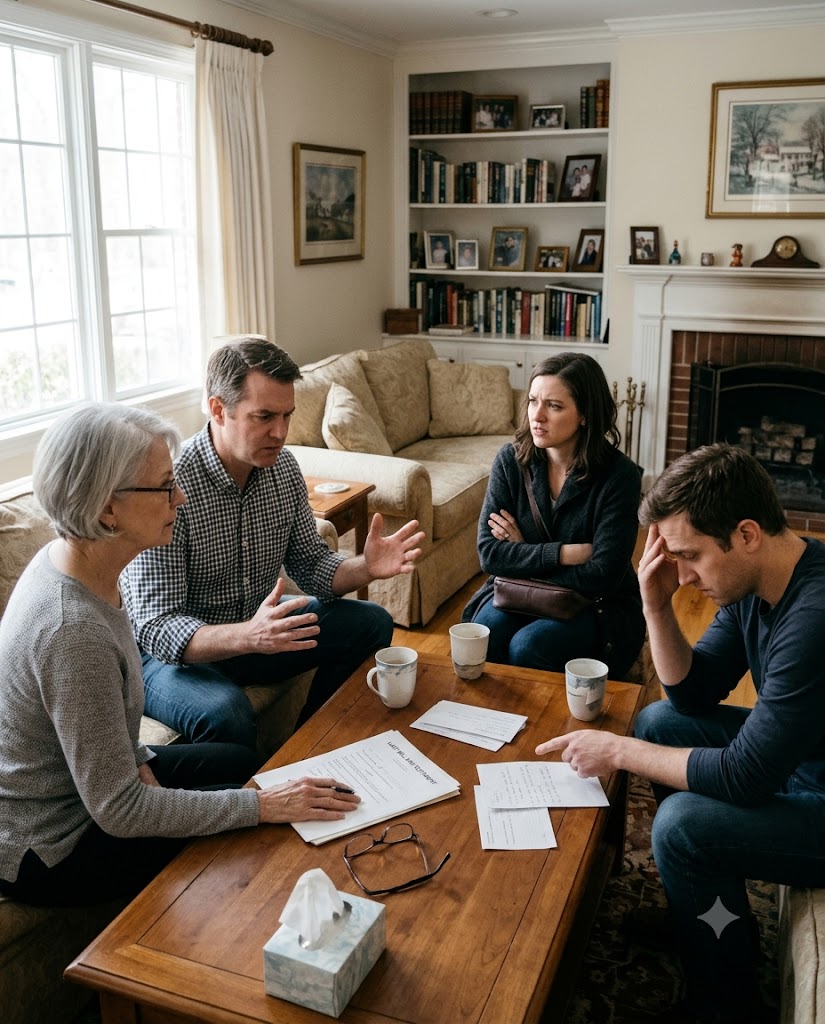
We sat around the dining table, and I placed a folder in front of me.
“As you know, I have savings, investments, and this house,” I began. “I’ve spent years planning how to divide my estate between the three of you.”
Michael leaned forward.
“Have you decided how much each of us will get?”
“I have,” I replied. “But I’ve also decided that none of you will receive a single penny unless you follow three rules.”
The room went silent.
Rebecca laughed nervously. “What kind of rules?”
“First, each of you must find and maintain a legitimate job. It doesn’t have to be glamorous, and you don’t have to earn a fortune. But you must support yourselves instead of depending on me.”
Michael frowned. “You can’t be serious.”
“Second, you must stop asking me for money. From now on, I will no longer pay your rent, car loans, shopping bills, or personal expenses.”
Daniel leaned back in his chair.
“And the third rule?” he asked sarcastically.
“You must demonstrate that you can manage your own lives responsibly. That means paying your bills, making realistic plans, and learning to save. I want to see consistent effort, not promises made whenever you need something.”

For a moment, nobody spoke.
Then Michael burst out laughing.
“So you’re giving us homework to inherit our own mother’s money?”
Rebecca shook her head in disbelief.
“This is ridiculous. You’re supposed to help us, not make our lives harder.”
Daniel’s response hurt the most.
“You brought us into this world,” he said. “Taking care of us is your responsibility.”
I felt my hands trembling beneath the table, but I kept my voice steady.
“I took care of you when you were children. I fed you, educated you, gave you a home, and did everything I could to prepare you for adulthood. But you’re not children anymore.”
Michael pushed his chair back.
“So if we don’t do what you say, we get nothing?”
“That’s correct.”
“You’d really leave your own children with nothing?”
“I would leave my estate according to my will,” I answered. “And I am free to decide what that will says.”
Rebecca began crying, but I could tell her tears came from anger rather than sadness.
“You’re being selfish,” she accused me. “All this money means nothing if you can’t use it to help your family.”
I looked at her carefully.
“Then why does helping your family always mean giving you money, but never asking you to become independent?”
She had no answer.
They left that evening furious with me.
By the following morning, my phone was overflowing with messages.
Michael called me controlling. Rebecca said I was punishing them for being honest about their struggles. Daniel sent a long message explaining that I was destroying our family over money.
For several days, I questioned myself.
Had I been too harsh? Was I using my inheritance to control my children? Should a mother really place conditions on what she left behind?
Then I remembered how many times I’d canceled my own plans to rescue them. I remembered Michael promising to repay a loan he never mentioned again. I remembered Rebecca asking for rent money while posting photographs from expensive restaurants. I remembered Daniel telling me that finding a job was beneath him.
I wasn’t refusing to love them.
I was refusing to keep funding their irresponsibility.
So I made another decision. I contacted my attorney and revised my estate plan to reflect my wishes. I also arranged for a portion of my savings to support a local program that helped older people who had been abandoned or financially exploited by their own families.
I didn’t do it to punish my children. I did it because I wanted my money to serve a purpose beyond maintaining their comfortable dependence.
Weeks passed.
My children continued calling, but the conversations were no longer about my health or how I was spending my days. They wanted to know whether I had changed my mind.
Each time, I gave them the same answer.
“The three rules still stand.”
Eventually, Michael stopped calling for a while. Rebecca sent occasional messages accusing me of favoring strangers over my own family. Daniel tried visiting twice, hoping I would give him money if he asked in person.
I didn’t.
For the first time in decades, I allowed myself to say no without immediately offering an explanation or an alternative.
And something unexpected happened.
I began sleeping better.

I started taking the painting classes I’d postponed for years. I visited friends without worrying that one of my children might call with another financial emergency. I even booked a short trip to the coast, something I hadn’t done since my husband died.
My life became quieter, but it also became more peaceful.
Three months later, Michael called again.
This time, he didn’t ask for money.
“I got a job,” he said awkwardly. “It’s not what I imagined doing, but it’s steady.”
I congratulated him.
He paused before adding, “I still think your rules are unfair.”
“I understand,” I replied. “But I’m proud of you for taking that step.”
A week later, Rebecca told me she had accepted a position at a small marketing firm. She admitted that she’d been frightened of failing, and asking me for money had allowed her to avoid making difficult choices.
Daniel was the last to change. He resisted the longest, insisting that opportunities simply hadn’t come his way. Eventually, however, he found work through a friend and began paying his own bills.
None of them transformed overnight. They still complained sometimes, and there were days when they slipped back into old habits. But for the first time, they were beginning to understand that their lives were their responsibility.
One Sunday, all three came to dinner again.
After we finished eating, Michael looked at me and said, “Mom, I don’t know if I’ll ever agree with everything you did. But I think I understand why you did it.”
Rebecca nodded.
“We thought you would always be there to catch us,” she admitted. “We never considered what that was costing you.”
Daniel stared at his plate before speaking.
“I treated you like you owed me everything. I’m sorry.”
Those words didn’t erase years of frustration, but they meant more to me than any promise to repay a loan.
I reached across the table and took his hand.
“I will always be your mother,” I said. “But loving you doesn’t mean protecting you from every consequence. Sometimes, the most loving thing I can do is let you discover what you’re capable of on your own.”
My children still have no guarantee that they will inherit my estate. My will reflects my values, and I intend to keep it that way.
If they continue building responsible lives, I may choose to leave them something meaningful. If they don’t, my savings will go toward causes that reflect the life I want to leave behind.
I no longer see that decision as cruel.
My inheritance is not a debt I owe my children for bringing them into the world. It is the result of decades of work, sacrifice, and careful planning. I have every right to decide how it will be used.
For years, I believed that being a good mother meant giving until there was nothing left for me.
Now I understand that love also requires boundaries.
My children may not like my three rules, but they have finally begun learning something I should have taught them long ago.
A parent’s responsibility is to prepare children for life—not to spend the rest of that life living it for them.