I’m 67 years old, and after working for 45 years, I thought I had finally earned the right to enjoy a little peace.
Apparently, my daughter disagreed.
Every Friday afternoon, my daughter, Melissa, dropped her two children at my house. She would arrive with their backpacks, a bag of snacks, and a list of instructions, then rush back to her car.
“Thanks, Mom! You know what to do.”
Sometimes she didn’t even wait for me to answer.

At first, I never complained. I loved my grandchildren, Sophie and Ethan, more than anything. Their laughter filled my quiet house, and having them around made me feel useful after retiring.
But what began as occasional babysitting slowly became a weekly obligation.
Melissa stopped asking whether I was available. She simply assumed I would be.
If I mentioned having plans, she laughed and said, “Come on, Mom. What else do you have to do?”
Those words hurt more than she realized.
I had spent decades working, raising her, and putting everyone else first. I had earned my retirement, yet my daughter treated my time as though it belonged to her.
Meanwhile, Melissa and her husband, Jason, enjoyed expensive dinners, weekend trips, and evenings out with friends. They often posted pictures of restaurants and hotels while I stayed home making dinner for two exhausted children.
I never begrudged them their happiness. Parents deserve breaks, too.
But I wondered when anyone would consider that I might need one as well.
One Thursday evening, I finally gathered the courage to speak up.
Melissa called to confirm that she would drop the children off the next afternoon.
“Actually, sweetheart,” I said carefully, “I was hoping to have this weekend to myself. I’m tired, and I’d really like a couple of days to relax.”
There was silence on the other end.
Then she laughed.
“You’re joking, right?”
“No, honey. I love having the kids, but I need a break sometimes.”
Her voice immediately hardened.
“A break? From what? You’re retired! You don’t even work anymore!”
I closed my eyes and took a slow breath.
“Being retired doesn’t mean I have unlimited energy. I’m still entitled to my own time.”
Melissa began listing everything she and Jason had to manage. Their jobs were demanding, she said. The children had activities. They needed time together as a couple.
I listened quietly.
“I understand,” I finally replied. “But I’m asking for one weekend.”
That was when she exploded.
“Fine! If you’re going to be so selfish, maybe you shouldn’t see the kids at all! You’ll never see them again!”
Her words left me speechless.
I had expected disappointment. Perhaps an argument. But I never imagined she would threaten to keep my grandchildren away simply because I wanted two days to myself.
Before I could respond, she hung up.
I sat in my living room staring at my phone.
For years, I had told myself that helping Melissa was an expression of love. Now I wondered whether I had unintentionally taught her that my needs never mattered.
That night, I made a decision.
If my daughter truly believed I should be free to live my own life, I would take her at her word.
I had always wanted to visit a small coastal town a few hours away. I had postponed the trip for years because something always came up: work, family obligations, or another Friday of babysitting.
I booked a hotel for the weekend.
I packed my suitcase, arranged for a neighbor to check on my house, and left Friday morning.
For the first time in years, I wasn’t waiting for anyone to tell me what I was allowed to do.
The seaside was beautiful. I walked along the beach, ate breakfast without rushing, and sat in a little café reading a book.
My phone buzzed repeatedly, but I ignored it.
I was finally enjoying myself.
Then, on Saturday morning, my phone rang with an unfamiliar number.
It was a police officer.
“Ma’am, are you currently away from home?”
My stomach tightened.
“Yes. Is something wrong?”
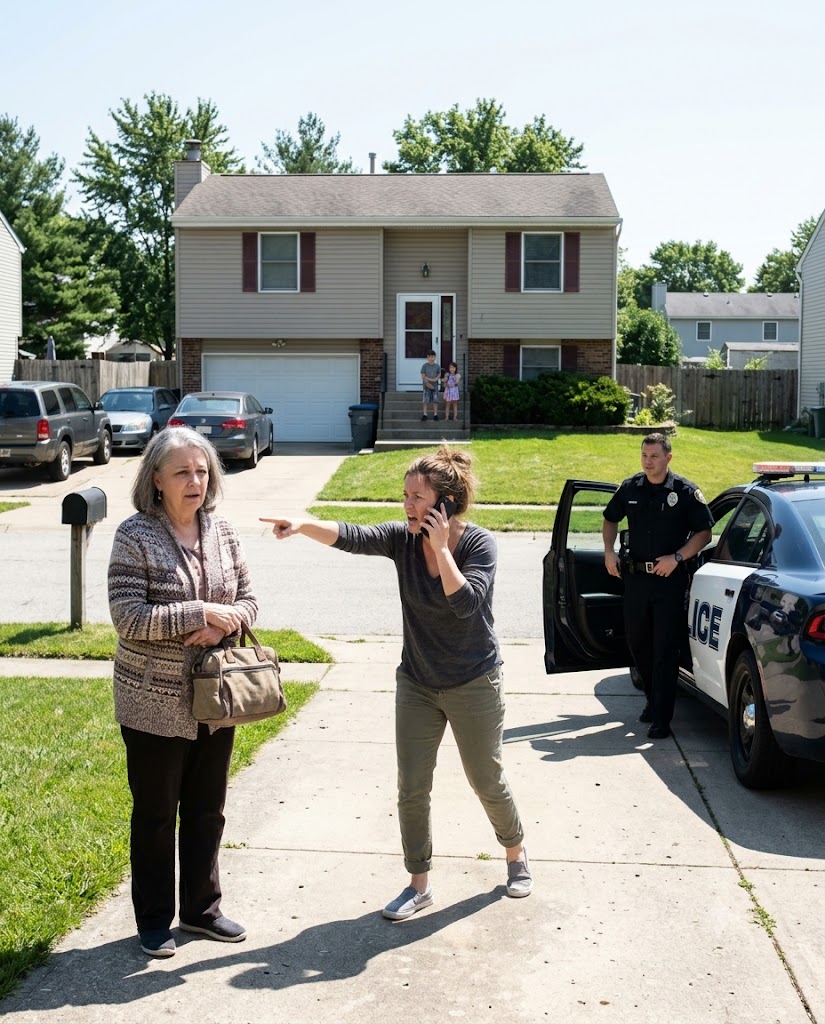
“Your daughter contacted us. She claims you were supposed to be watching her children and that you abandoned them.”
I stared at the ocean beyond my hotel window.
“Her children are with their parents, aren’t they?”
The officer paused.
He explained that Melissa had reported the situation as though I had suddenly disappeared while responsible for the children.
I told him what had actually happened. I had informed my daughter that I would be unavailable, and she had responded by threatening to prevent me from seeing my grandchildren.
I was not their scheduled caregiver that weekend, and I had never agreed to take responsibility for them.

The officer listened carefully.
After checking the details, he explained that I was under no legal obligation to provide childcare simply because I was their grandmother. He advised me to keep records of our communications in case the family dispute continued.
I thanked him and ended the call.
For several minutes, I couldn’t move.
My own daughter had involved the police because I had taken a weekend off.
When I returned home on Sunday evening, I discovered dozens of missed calls and angry voicemails.
Melissa accused me of humiliating her. Jason said I had created unnecessary trouble for their family. Another message called me a terrible grandmother who clearly didn’t love her grandchildren.
I listened to every message.
Then I sat at my kitchen table and cried.
Not because I regretted taking the trip, but because I finally understood how little my daughter respected my boundaries.
The next morning, Melissa arrived at my house without warning.
“You made me look like an idiot!” she shouted before I had even finished opening the door.
I invited her inside, hoping we could have a calm conversation.
Instead, she paced around my living room, accusing me of choosing a vacation over my family.
“I needed you this weekend!” she insisted. “Jason and I had plans!”
I looked at her in disbelief.
“You had plans, so you expected me to cancel mine?”
“You’re my mother!”
“And I’m a person, Melissa. I have needs, too.”
She folded her arms.
“So you’re refusing to help us now?”
“No. I’m saying you need to ask instead of assuming. And you cannot threaten to take my grandchildren away whenever I say no.”
For the first time, she seemed unsure of what to say.
I continued, my voice trembling but firm.
“I love Sophie and Ethan. I always will. But loving them doesn’t mean I must be available every weekend. If you want me to babysit, ask me in advance. I’ll tell you honestly whether I can. And if I say no, you need to respect that.”
Melissa shook her head, muttered that I had changed, and walked out.
Perhaps I had changed.
Perhaps I had finally stopped confusing love with obedience.
Over the following weeks, our relationship remained strained. Melissa didn’t call as often, and I missed the children terribly. I refused to use them as weapons in our disagreement, but I also refused to apologize for taking a weekend away.
Eventually, Melissa called.
Her voice was quieter than usual.
“Mom, can we talk?”
We met for coffee a few days later. She admitted that she and Jason had become so accustomed to my help that they had stopped considering what it cost me.
She didn’t apologize for everything, and we still had much to work through. But it was the first time she had acknowledged that my time mattered.
We agreed on a new arrangement. Babysitting would happen only when we discussed it beforehand, and I would be free to decline without being punished for it.
I also told her that rebuilding trust would take time.
I still adore my grandchildren. I still want to be part of their lives.
But I have learned that being a loving grandmother doesn’t require me to abandon myself.
At 67, I finally took the trip I had postponed for years. And if I need another weekend away, I’ll take it.
My daughter once told me I would never see my grandchildren again if I didn’t do what she wanted.
I didn’t retaliate. I didn’t threaten her back.
I simply stopped allowing fear to make my decisions.
Because the truth is, family should be built on love, respect, and understanding—not on the assumption that one person’s life matters less than everyone else’s.
And I can love my daughter with all my heart without giving her control over mine.