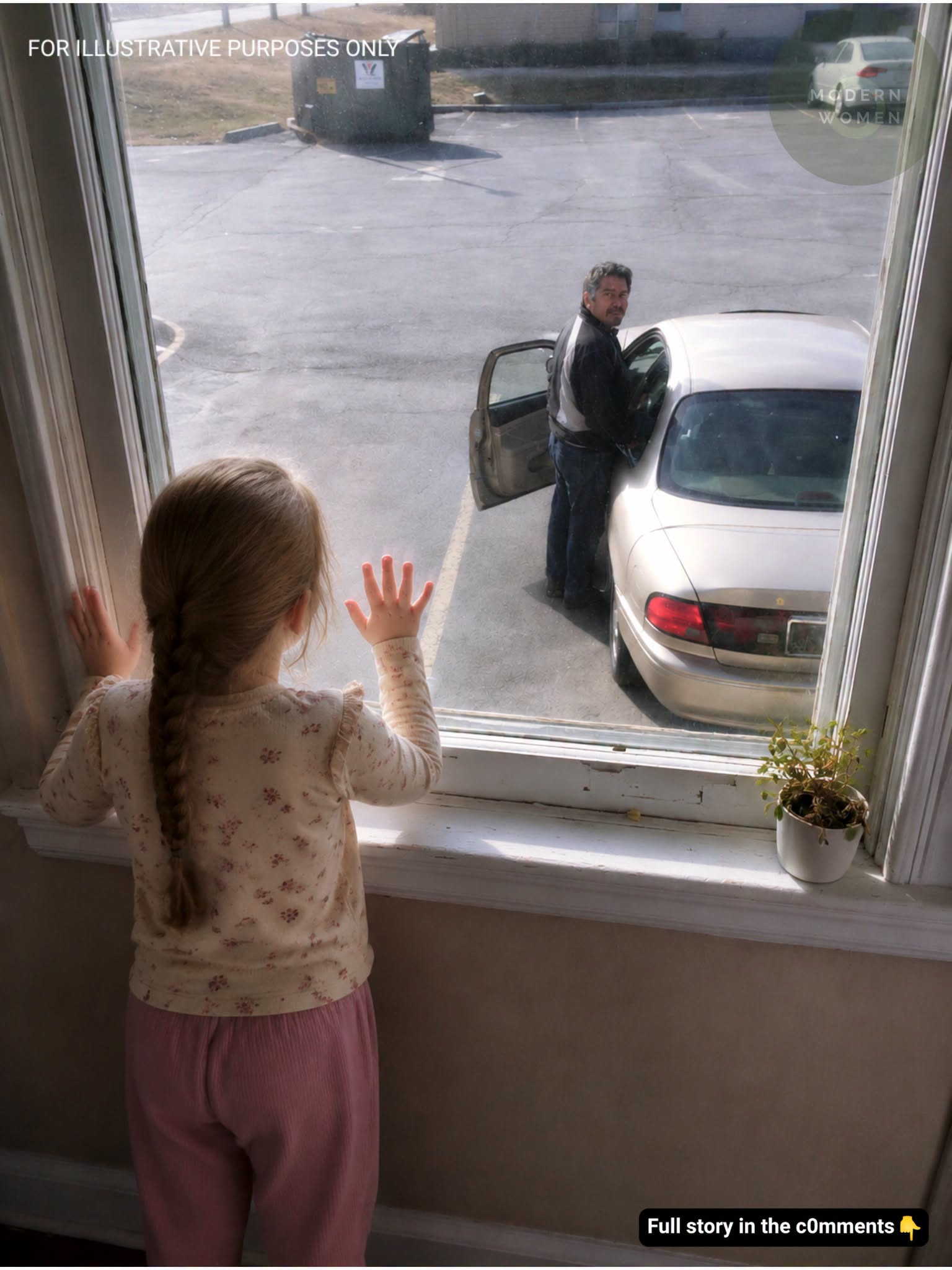

The day my marriage ended, I walked away with a four-year-old daughter, $1,100 in my checking account, and an old sedan that only started if I turned the key twice and whispered a prayer.
That was everything I still owned.
My name is Poppy, and I was thirty-one years old when I learned how quickly a life that seemed secure could disappear.
One month earlier, I had believed I was building a future. Then my husband packed his bags, left me with every bill, and erased every promise we had ever made.
The hardest part wasn’t losing him.
It was watching my daughter try to understand why her father had suddenly become someone who lived somewhere else.
As we packed our lives into worn cardboard boxes, Trixie held up her favorite purple sweater.
“Are we going somewhere fun?” she asked with hopeful eyes.
I smiled because mothers become actresses the moment their children need them to.
“We’re going somewhere new.”
She considered that answer carefully.
“Will Daddy come?”
The words struck harder than any divorce paper.
“Not today, sweetheart.”
She accepted it with the quiet resilience children somehow possess before life teaches them otherwise. She folded the sweater with tiny clumsy hands, placed it inside the box, and happily continued packing while I turned away so she wouldn’t see tears rolling down my face.
I had no savings.
My part-time job at a dental office barely covered groceries.
Everything else became a question of what could wait another week.
Every night after Trixie fell asleep, I searched apartment listings until my eyes burned.
Every listing felt like another closed door.
Security deposits.
Application fees.
Credit checks.
Income requirements.
Some landlords stopped answering the moment I mentioned I had a child.
Others politely explained that they wanted “quiet tenants.”
Several apartments cost more than my monthly income.
Within days, fear stopped feeling like an emotion.
It became something physical.
It settled inside my stomach.
It tightened around my chest whenever my phone rang.
It followed me into grocery stores, gas stations, and every conversation about money.
I was running out of time.
Then one afternoon, while buying milk, I noticed a handwritten advertisement taped crookedly to the grocery store window.
GARAGE APARTMENT FOR RENT. PALMER STREET. $800. ASK FOR ALVAREZ.
I stared at the paper long enough for the cashier to notice.
“You okay?” she asked.
“Is this apartment still available?”
She glanced toward the notice.
“You’ll have to ask him.”
“Do you know Mr. Alvarez?”
She smiled faintly.
“Everyone around here knows Mr. Alvarez.”
There was something about the way she said it that made me curious—and slightly nervous.
Still, I copied the address.
The apartment sat behind an aging blue house on Palmer Street.
It had once been a garage.
Now it was a tiny one-bedroom apartment with faded walls, a kitchen barely large enough for one person to turn around in, and a refrigerator that buzzed constantly like it was holding itself together through determination alone.
The floor leaned slightly toward the bathroom.
There wasn’t a dishwasher.
There wasn’t a laundry room.
There wasn’t enough room for a dining table.
A small window above the sink overlooked someone else’s tomato garden.
To anyone else, it probably looked depressing.
To me, it looked like survival.
Trixie immediately ran through every room.
“Can I put glow-in-the-dark stars on my ceiling?”
“We’ll see.”
She crossed her arms dramatically.
“That means no.”
“It means we’ll see.”
She opened the tiny closet and frowned.
“It’s really small.”
“So are your clothes.”
She laughed.
That sound alone made the apartment feel brighter.
Standing outside was the landlord.
Mr. Alvarez.
He looked to be in his seventies.
Every time I would later see him, he wore the same gray work shirt, though I eventually learned he owned several identical ones.
His white hair was trimmed short.
His weathered hands looked like they had spent decades building things instead of talking about them.
A thin scar crossed the base of his left thumb.
His face revealed absolutely nothing.
He looked at me.
Then at Trixie.
Then at my struggling car, which had stalled twice before finally making it into the driveway.
He asked only three questions.
“Do you smoke?”
“No.”
“Got a dog?”
“No.”
“The little girl yours?”
“Yes.”
Trixie quietly slipped her hand into mine.

He looked at her for another long second before speaking.
“Eight hundred dollars. Due on the first. No lease.”
“No lease?” I asked.
“I don’t like paperwork.”
I blinked.
“Is there a security deposit?”
“No.”
“Application fee?”
“No.”
“Do you need proof of income?”
His expression never changed.
“Can you pay eight hundred?”
“Yes.”
“Then move in Saturday.”
That was the interview.
No references.
No background check.
No questions about my divorce.
No judgment over my finances.
Nothing.
I thanked him so many times that he finally frowned.
“Stop thanking me.”
“I’m just grateful.”
“Pay on time.”
“I will.”
And I did.
We moved in carrying six boxes, two suitcases, and a used mattress my sister no longer wanted.
Trixie claimed the bedroom.
I unfolded a narrow sofa in the living room every night.
Rain tapped gently against the roof our first evening there.
Around midnight, Trixie appeared holding her blanket.
“I can’t sleep.”
“Too loud?”
She nodded.
I lifted the blanket.
“Come here.”
She curled beside me and rested her head against my shoulder.
After a long silence she whispered,
“Do you like our new house?”
I looked around the tiny apartment.
The crooked floor.
The buzzing refrigerator.
The tiny kitchen.
The faded paint.
“I think I will.”
She smiled.
“I like looking at the tomatoes.”
“They’re not ours.”
“We can still look.”
That became our life.
I worked mornings at the dental office.
Three evenings every week I worked at a bakery.
My sister watched Trixie whenever I worked late.
Every dollar mattered.
Coupons became treasure maps.
Shoes got patched instead of replaced.
I learned which utility bills would tolerate being paid three days late—and which absolutely would not.
No matter what happened, rent always came first.
On the first day of every month, I wrote an $800 check, walked across the yard, and slid it beneath Mr. Alvarez’s back door.
He never gave me receipts.
I never asked.
He mostly kept to himself.
Every morning he watered his plants.
Whenever something broke, he somehow fixed it before I had the chance to mention it.
One afternoon I stepped outside and discovered the loose step leading to my apartment had already been repaired.
“You should’ve told me,” he said.
“I didn’t want to bother you.”
“A broken step becomes a broken ankle.”
Another morning I opened my door and found a bag overflowing with oranges.
Trixie carried them inside.
“The orange fairy came!”
“I guess she did.”
When I thanked Mr. Alvarez later, he simply shrugged.
“Tree made too many.”
That was all he said.
Three months after moving in, something strange happened.
I checked my bank account while paying bills.
The $800 rent payment was still sitting there.
At first I thought the banking app hadn’t updated.
The next day it was still there.
Then another day passed.
My first thought wasn’t excitement.
It was panic.
He must have lost the check.
I hurried across the yard and knocked.
After a long pause he opened the door.
“Mr. Alvarez, I think my rent check got misplaced. I can write another one.”
He stared at me.
“It’s handled.”
Then he quietly closed the door.
That was it.
I assumed he simply deposited checks every few months like my grandfather used to.
December arrived.
The check still wasn’t cashed.
January passed.
February followed.
None of them cleared.
Every month I wrote another check.
Every month nothing happened.
I expected thousands of dollars to disappear overnight.
So I refused to touch that money.
Mentally, it wasn’t mine anymore.
It belonged to Mr. Alvarez.
I asked him again.
“It’s handled.”
I asked months later.
“It’s handled.”
Always the same answer.
Nothing more.
Life slowly became steadier.
Trixie turned five.
Then six.
Then seven.
She learned to read.
She stopped asking when Daddy would come back.
Instead she asked whether she could paint her bedroom yellow.
I finally left my bakery job after receiving more hours at the dental office.
I paid off one credit card.
Little by little, life stopped feeling like constant survival.
Yet one mystery never changed.
Not a single rent check had ever been cashed.
By the end of the third year, nearly $29,000 still sat untouched inside my account.
I couldn’t ignore it anymore.
This time I didn’t knock timidly.
I marched across the yard and demanded answers.
“Mr. Alvarez, enough.”
He looked at me silently.
“I need to know why you’ve never cashed a single rent check.”
Without saying a word, he disappeared inside.
When he returned, he held an old shoebox.
The cardboard corners had softened with age.
One side was held together with yellowed tape.
He placed it in my hands.
“What is this?”
“Open it.”
His voice remained calm.
I looked over his shoulder into the house.
For the first time in three years I asked,
“May I come inside?”
After a moment’s hesitation, he stepped aside.
His home was immaculate.
It smelled like coffee and furniture polish.
A clock ticked steadily above the stove.
Only one coffee mug sat beside the sink.
Family photographs covered an entire wall.
One picture caught my attention immediately.
A younger Mr. Alvarez stood beside a beautiful dark-haired woman.
Both smiled with genuine happiness.
He noticed me looking.
“Sit.”
I placed the shoebox on the kitchen table and lifted the lid.
My breath caught.
Inside were every single rent check I had ever written.
August.
September.
October.
November.
Every month.
Every year.
Each stack was carefully bundled with rubber bands and labeled by date.
I stared in disbelief.
“You… kept them?”
“Yes.”
“Why?”
He slowly sat across from me.
“You always paid on time.”
“That doesn’t explain anything.”
“No.”
His eyes rested on the table.
“It doesn’t.”
My hands began trembling.
For three years I had lived with constant anxiety.
For three years I had carefully protected money I believed could disappear overnight.
One banking mistake.
One unexpected withdrawal.
Everything we’d built could collapse.
I pushed the shoebox toward him.
“I deserve an explanation.”
He remained quiet for a long time.
Finally he spoke.

“My daughter was named Sofia.”
I looked back toward the photographs.
The woman wasn’t his wife.
She was his daughter.
Now I saw it.
She had his eyes.
His mouth.
His stubborn expression.
“She had a little girl,” he continued softly.
“Camila.”
I listened without interrupting.
“Sofia married young.”
He paused.
“At first, everyone thought her husband was wonderful.”
Another pause.
“Then he began controlling everything.”
His fingers rubbed absentmindedly against the scar on his thumb.
“The money.”
Another pause.
“The clothes she wore.”
“The friends she saw.”
“He slowly made sure she had nowhere left to go.”
My anger disappeared.
“What happened?”
His eyes remained fixed on the table.
“One day she called.”
His voice became almost inaudible.
“She asked if she and Camila could come stay here.”
My heart sank.
“What did you tell her?”
He closed his eyes.
“I told her to go home.”
Silence swallowed the room.
“I told her marriage was something people worked through.”
He swallowed painfully.
“I told her to try harder.”
The clock above the stove continued ticking.
It sounded impossibly loud.
“Why?” I whispered.
“Because I was stubborn.”
His voice cracked.
“Because I believed keeping a marriage together mattered more than admitting it was hurting her.”
He looked toward Sofia’s photograph.
“Six weeks later…”
He couldn’t continue immediately.
“They died in a car accident.”
I covered my mouth.
“He was driving.”
Another pause.
“He’d been drinking.”
The air left my lungs.
“I’m so sorry.”
He nodded.
“I had money.”
His voice remained flat.
“I had this apartment.”
“I had empty rooms.”
“I could have helped.”
“You didn’t know what would happen.”
He looked directly into my eyes.
“I knew she was afraid.”
Those words landed harder than anything else he had said.
“I knew that.”
“And somehow… I convinced myself that wasn’t enough.”
Tears blurred my vision.
I remembered arriving three years earlier.
Trying not to cry.
Trying not to seem desperate.
Trying not to ask for more than anyone wanted to give.
Mr. Alvarez quietly said,
“When you arrived, you had the same look.”
“What look?”
“The one Sofia had.”
He looked at me gently.
“You were trying very hard not to ask for help.”
I couldn’t speak.
“You brought your daughter.”
“Your car barely ran.”
“You looked at that tiny apartment like someone had handed you a castle.”
I laughed weakly.
“It felt exactly like that.”
“I decided something.”
“What?”
“I wasn’t going to make the same mistake twice.”
My throat tightened.
“I wanted to give you time.”
“Time to rebuild.”
I looked at the shoebox again.
“Then why make me write rent checks?”
His answer came immediately.
“Because I refused to make you feel like charity.”
I stared at him.
“You earned your home every month.”
“You paid exactly what I asked.”
“What happened after that was my decision.”
I whispered,
“That’s nearly twenty-nine thousand dollars.”
“I know.”
“You could’ve used it.”
“I have enough.”
“You wear the same gray shirt every day.”
“I own seven.”
Despite everything, I laughed through tears.
For the first time in three years, I saw the faintest smile appear on his face.
Then he reached beneath the checks and removed a white envelope.
“My turn.”
My name was written neatly across the front.
Inside was a letter from his bank confirming that he had no intention of cashing any of the checks.
Beneath it rested another document.
I read it once.
Then again.
“This can’t be right.”
“It is.”
The paperwork transferred ownership of the garage apartment—and the small section of land surrounding it—to me.
Not the main house.
Only our little home.
I immediately shook my head.
“I can’t accept this.”
“You can.”
“You hardly know me.”
“I’ve watched you.”
“That’s not the same.”
“For three years I watched you leave before sunrise.”
“I watched you come home exhausted.”
“I watched you help Trixie practice reading.”
“I watched you repair things instead of replacing them.”
“I watched you buy clothes for your daughter before buying any for yourself.”
He looked directly at me.
“You never once spent the money I refused to take.”
“It wasn’t mine.”
“It always was.”
I broke down completely.
Not quiet tears.
Not polite tears.
Years of fear, exhaustion, relief, and gratitude poured out all at once.
I cried for myself.
I cried for Sofia.
I cried for Camila.
Most of all, I cried for the old man sitting across from me who had spent years carrying the unbearable weight of one decision he could never undo.
He didn’t interrupt.
He simply waited.
Eventually I wiped my eyes.
“Why tell me now?”
His answer surprised me.
“Because today you came here angry.”
I blinked.
“You weren’t scared.”
He smiled gently.
“Three years ago you would’ve apologized before asking.”
“You would’ve accepted any answer I gave.”
“You would’ve gone home and worried alone.”
He nodded toward me.
“Today you demanded the truth.”
“You finally believed your voice mattered.”
Only then did I realize he was right.
Without noticing, I had changed.
I wasn’t the frightened woman who had arrived carrying six boxes and a broken heart.
I had become someone who stood up for herself.
“What about Trixie?” I asked softly.
“The home will belong to you.”
He smiled toward the window.
“Someday it can belong to her.”
“You planned all this?”
“Not at first.”
“When?”
He looked toward the photograph of Sofia and Camila.
“The day I watched Trixie learning to ride her bicycle.”
I smiled.
“She crashed into your tomatoes.”
“She apologized to every single plant.”
“She felt awful.”
“She’s a good child.”
I reached across the table and gently placed my hand over his.
“You saved us.”
He slowly shook his head.
“No.”
“You saved yourselves.”
“I simply kept the door open long enough for you to walk through it.”

That evening I told Trixie we officially owned our little home.
She stared at me in disbelief.
“Even the sink window?”
“Even the sink window.”
“And the crooked floor?”
“Especially the crooked floor.”
She threw herself into my arms.
Outside, Mr. Alvarez stood quietly watering his tomato plants.
Before I could stop her, Trixie raced across the yard and hugged him around the waist.
He froze.
For a long moment he didn’t move.
Then, slowly, he wrapped one rough hand around her back.
For the first time since I’d met him, every emotion he’d hidden for years appeared on his face.
There was grief.
There was regret.
There was forgiveness.
And finally…
There was love.
Years have passed since that afternoon.
The shoebox still sits on the highest shelf in my closet.
Every untouched rent check remains inside exactly where Mr. Alvarez placed it.
People sometimes ask why I keep them.
Because they remind me that the greatest acts of kindness rarely arrive with applause or dramatic speeches.
Sometimes they arrive disguised as a tiny garage apartment, an old man carrying unbearable regret, and a door that quietly stays open until you’re finally strong enough to walk through it.