
Aug
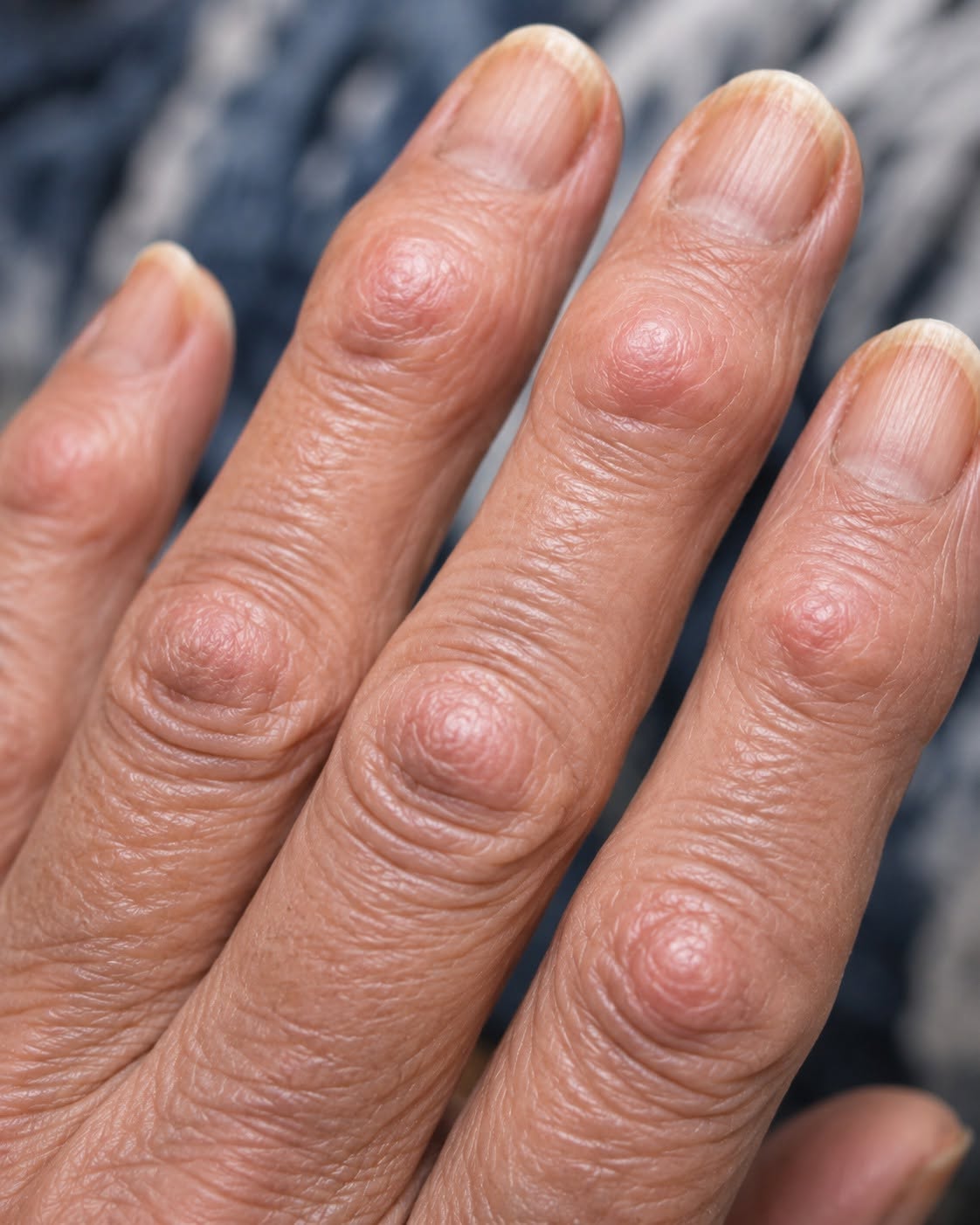
As we age, the body goes through many changes, and some of them can be surprising or concerning. One common change is the appearance of firm, hard bumps around the finger joints, especially near the fingertips.
These bumps may look unusual and can sometimes cause pain or stiffness, leaving people wondering what they are and whether they signal a serious health problem.
In many cases, these bumps are bony enlargements associated with osteoarthritis, a common form of arthritis that develops as the cartilage cushioning the joints gradually becomes thinner and less effective.
When the bumps form on the joints closest to the fingernails—the distal interphalangeal, or DIP, joints—they are commonly called Heberden’s nodes. Similar bony enlargements that develop on the middle finger joints are known as Bouchard’s nodes.
Why Do These Bumps Form?
Healthy cartilage allows the bones inside a joint to move smoothly against one another. With osteoarthritis, that protective cartilage gradually wears down. As the joint changes, the body may produce additional bone around its edges, forming small growths known as bone spurs.
Over time, these changes can create the firm, noticeable bumps seen around the finger joints. The surrounding skin may also appear slightly swollen, stretched, or shiny.
Heberden’s and Bouchard’s nodes become more common with age and are seen more frequently in women. Genetics can also play an important role, meaning people with a family history of hand osteoarthritis may be more likely to develop them.
Repeated stress on the hands, previous joint injuries, and years of frequent hand use may also contribute to joint wear in some people.
Why Do the Bumps Seem to Spread?
Some people notice that a bump appears on one finger and later develops on several others. This can make it seem as though the bumps are “spreading.”
However, the bumps do not actually move from one finger to another. Instead, osteoarthritis may gradually affect additional joints over time.
The changes can occur slowly over many years, and their severity varies considerably from person to person.

Other Symptoms to Watch For
Some people have visible nodes with little or no discomfort. Others may experience symptoms such as:
- Pain or tenderness around the affected joints
- Stiffness, particularly after periods of inactivity
- Swelling around the fingers
- Reduced range of motion
- Difficulty bending or straightening the fingers
- Weaker grip or difficulty performing precise hand movements
Everyday activities such as buttoning clothing, opening jars, turning keys, writing, or handling small objects may become more difficult when several joints are affected.
Some people also notice that stiffness or discomfort feels more noticeable during cold weather or after the hands have remained still for a long period.
How Are These Nodes Diagnosed?
Doctors can often recognize Heberden’s or Bouchard’s nodes by examining the hands and asking about symptoms.
In some cases, an X-ray may be recommended. Imaging can reveal changes associated with osteoarthritis, including narrowing of the joint space, bone spurs, and other structural changes.
However, not every bump or swollen finger joint is caused by osteoarthritis.
Other forms of arthritis, cysts, injuries, inflammation, and additional medical conditions can sometimes produce similar-looking changes. For this reason, new or unexplained joint changes should not automatically be assumed to be Heberden’s nodes.
When Should You See a Doctor?
Consider seeking medical advice if a finger joint becomes suddenly or severely painful, noticeably swollen, red, or warm, or if the symptoms rapidly worsen.
A healthcare professional should also evaluate persistent joint problems that significantly limit hand movement or interfere with normal daily activities.
Getting an accurate diagnosis is especially important because different types of arthritis and joint conditions may require different treatments.

Can Heberden’s Nodes Be Treated?
There is currently no treatment that completely reverses the structural joint changes caused by osteoarthritis. However, many people can successfully manage their symptoms and maintain good hand function.
Depending on the severity of the condition, treatment may include pain-relieving or anti-inflammatory medicines when medically appropriate, splints or supportive devices, warm or cold compresses, and gentle exercises designed to maintain flexibility and strength.
A doctor, physical therapist, or occupational therapist may also recommend specific exercises and techniques for protecting painful joints.
Simple Ways to Protect Your Hands
Small changes in daily habits may reduce unnecessary strain on affected joints. Using larger or ergonomically designed handles, avoiding repetitive gripping when possible, taking breaks during hand-intensive activities, and using tools that reduce the amount of force required can all help.
Regular physical activity, maintaining a healthy lifestyle, and eating a balanced diet can also support overall bone and joint health.
Most importantly, persistent finger pain or noticeable joint changes should not simply be dismissed as “part of getting older.” While bony finger nodes are often related to osteoarthritis and are not usually dangerous by themselves, proper evaluation can help confirm the cause, relieve discomfort, and preserve hand function for as long as possible.